
我和《我们的美国故事》英文版新书遇到有缘人
一次从洛杉矶到旧金山的艺术之旅,几场意外相逢,一段跨越文化与语言的友情
文章 来源 美州时报
⼈⽣中有些相遇,是早已约定的重逢;有些相遇,却是命运不经意间安排的惊喜。
⼀本刚刚出版的书,⼀次说⾛就⾛的旅⾏,⼏位素未谋⾯却⼀见如故的朋友,竟然串起了⼀段奇妙⽽温暖的故事。
更令我没有想到的是,我带着《我们的美国故事》英⽂版新书踏上旅途,原本只是去旧⾦⼭欣赏风景、拜访朋友,却意外遇见了能够读懂我的艺术、理解华⼈故事的有缘⼈。
回想起来,这趟旅程,真有⼏分电影的味道。
⼀本新书,开启⼀段意想不到的旅程
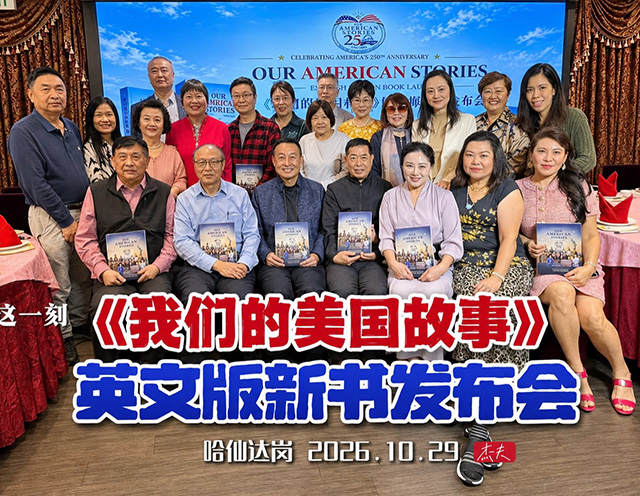
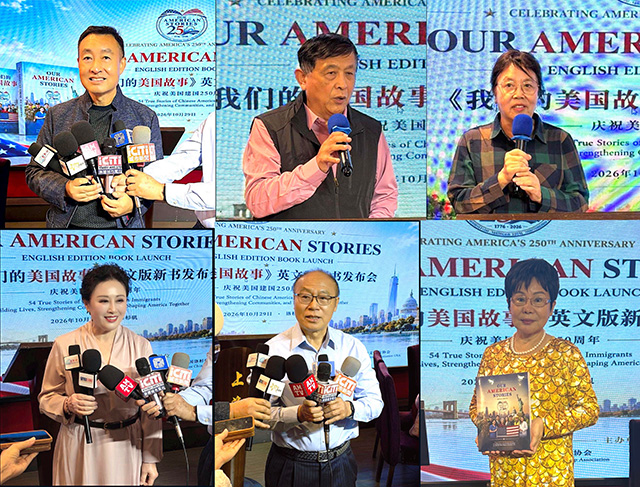
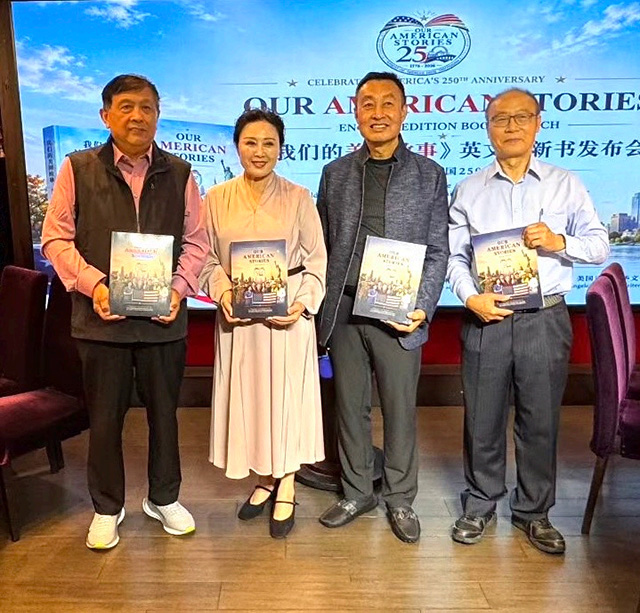
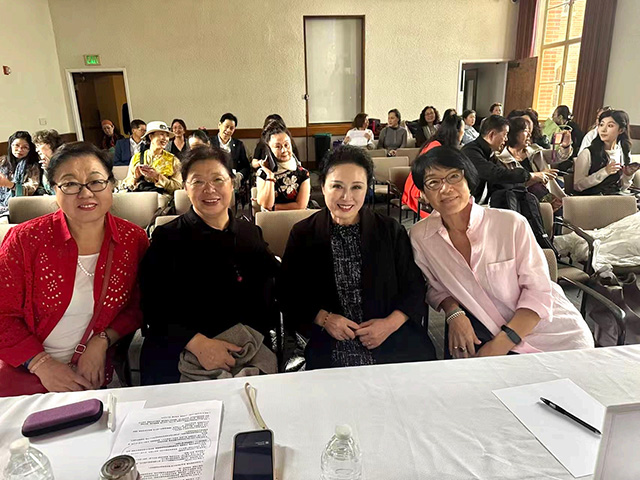
2026年10⽉29⽇中午,纪念美国建国250周年的纪实⽂学⽂集《我们的美国故事》英⽂版(Our American Stories)新书发布会,在洛杉矶哈仙达岗上海滩餐厅隆重举⾏。⽂集总策划⿅强、主编黄宗之、英⽂版翻译负责⼈艾伦•赵琼博⼠、评委会主席北奥,以及作者、编委和各界嘉宾共同出席。
这部由美中和平友好协会和美国洛杉矶华⽂作家协会共同推动的⽂集,凝聚了许多旅美华⼈的⽣活经历与⼈⽣感悟。从130余篇征⽂中,93篇作品被收⼊中⽂版,其中54位作者的作品又被选译为英⽂出版。
作为英⽂版翻译⼯作的组织协调者,我与纽约世界艺术出版社翻译团队的同仁,以及负责终审的著名翻译家陈峰教授、赵荣信教授,共同经历了从中⽂⾛向英⽂的翻译过程。
我深知,这不仅仅是⼀本书的翻译出版,更是⼀项跨越语⾔、⽂化与代际的记忆⼯程。
我们这⼀代华⼈,怀揣梦想来到美国,在陌⽣的⼟地上⼯作、⽣活、创业,有欢笑,也有眼泪;有成功,也有失败。许多看似平凡的故事,其实都折射着⼀个时代的社会变迁。
如果没有⽂字记录,这些经历也许会随着岁⽉渐渐消失;如果只有中⽂记录,它们又可能⽆法被更多不同⽂化背景的美国⼈所了解。
我特别赞同⽂集总策划⿅强先⽣所说的⼀句话:“华⼈的故事,本来就是美国故事的⼀部分。”
这句话不仅道出了出版这部书的初衷,也让我更加坚定了推动英⽂版出版的意义。
参加完洛杉矶举办的第四届国际华语原创IP电影节和《我们的美国故事》新书发布会之后,我与美国《伊利华报》创始⼈、资深媒体⼈浦瑛结伴,准备驱车沿着风景如画的加州⼀号公路前往旧⾦⼭。
我们⼀路欣赏太平洋的壮丽海景,远望海天相接,感受⼭峦、海湾与天空不断变换的⾊彩。两个热爱⽣活、热爱艺术、也热爱讲故事的⼥⼈,沿途谈艺术、谈电影、谈⼈⽣,笑声不断。
汽车在海岸公路上前⾏,仿佛驶⼊了⼀幅不断展开的油画。
⽽浦瑛神秘地告诉我:“这次旧⾦⼭之⾏,还有⼀个特别的惊喜!”
我问她是什么惊喜。
原来,她即将与⼀位⼗多年未见的⽼朋友——周爱琴⼤姐重逢。

⼗多年后的重逢,让我遇见⼀位艺术知⾳
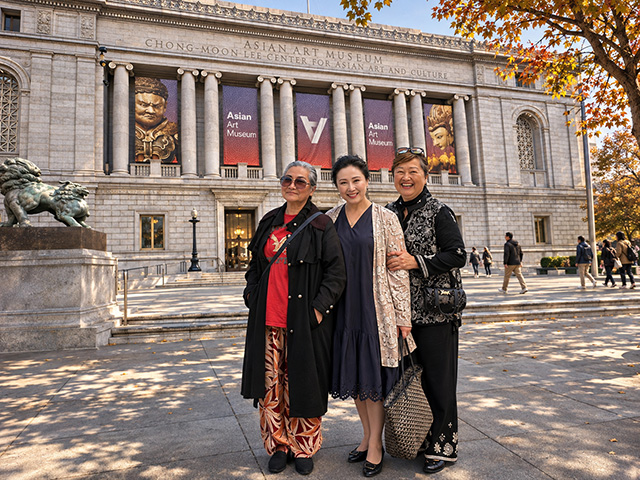
在旧⾦⼭亚洲艺术博物馆,我们见到了早已等候在那⾥的周爱琴⼤姐。
⼗多年未见的⽼朋友终于重逢,那份喜悦⾃然不必多说。浦瑛与爱琴相见,彼此的亲切与激动也深深感染着她们⾝边的我。
⽽让我意外的是,浦瑛的⼀次⽼友重逢,竟然也为我带来了⼀位新知⾳。
爱琴长期致⼒于亚洲⽂化与教育事业,曾在加州⼤学伯克利分校推动东亚与西⽅⽂化相关的学术项⽬,如今又在亚洲艺术博物馆教授课程。
我们同为艺术⼯作者,⼏句话下来,便感到⼗分投缘。我们三⼈,浦英最⼩个头最⾼,她的爱琴⼤姐,实际上与我同龄,甚⾄还⼩我三个⽉。
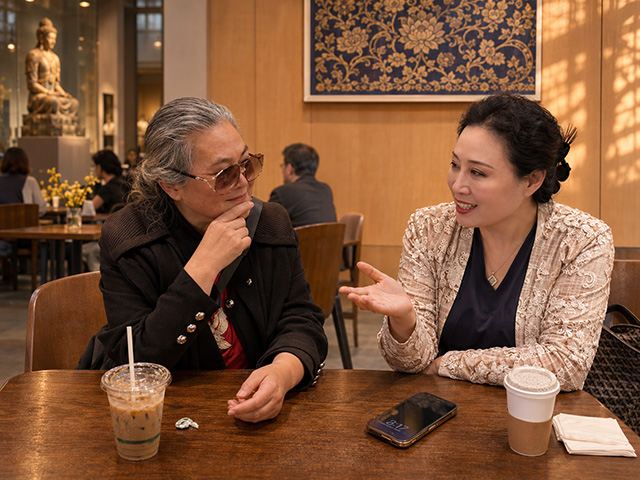
从中国传统艺术谈到西⽅现代艺术,从不同⽂化的审美差异谈到艺术教育;从绘画、雕塑的创作语⾔,谈到⼥性艺术家的⼈⽣经历,话题⼀个接着⼀个。
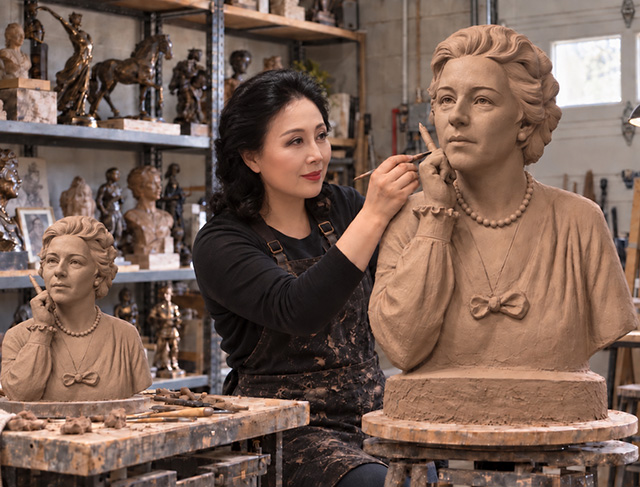
我向她讲起⾃⼰多年来从事绘画与雕塑创作的经历,特别是以美国历史⼈物和重⼤历史事件为主题的⼤型青铜浮雕,以及通过艺术记录不同民族共同记忆的探索。
她则与我们分享长期从事亚洲⽂化教育的见闻与思考。
我们越谈越有兴趣,仿佛不是第⼀次见⾯,⽽是久别重逢。
我忽然感到,⼈与⼈之间真正的距离,并不完全由时间和空间决定,⽽是由彼此的精神世界决定。
有些⼈认识⼏⼗年,却始终难以深⼊交流;有些⼈第⼀次见⾯,就能从⼀个眼神、⼀句话、⼀件艺术作品中,感受到思想的共鸣。
艺术的魅⼒,正在于它可以让不同⽣活背景的⼈,在精神世界⾥相遇。
那天,我不仅分享了艺术创作,也收获了⼀份真挚的新友情。
⼀顿中国晚餐,意外变成了⼀场艺术采访
当天晚上,还有⼀场更加有趣的相遇在等着我们。
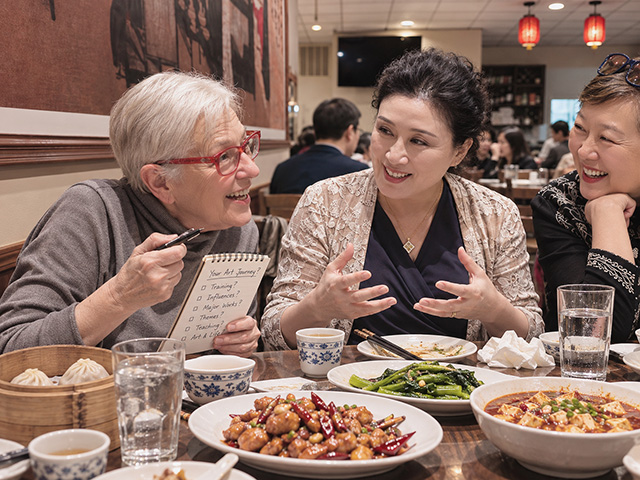
浦瑛的媒体界⽼朋友、美国著名资深记者桑迪·克洛斯(Sandy Close)热情邀请我们到⼀家中国餐馆共进晚餐。
Sandy原名亚历⼭德拉·克洛斯(Alexandra Close),是⼀位长期关注美国社会、族裔⽂化与媒体发展的杰出记者。
她曾长期担任太平洋新闻社和新美国媒体的执⾏董事,也是推动美国族裔与社会媒体发展的重要⼈物。
她的丈夫,已故历史学家、社会学家弗朗茨·舒尔曼(Franz Schurmann),曾在加州⼤学伯克利分校任教38年,以研究中国近现代历史和国际政治⽽闻名。
他们两⼈都曾以各⾃的专业⼯作,推动美国社会对亚洲、尤其是中国的理解。
Sandy虽然已经年逾⼋旬,依然精神矍铄,思维敏捷,充满好奇⼼。
⽼朋友相聚,⾃然少不了欢声笑语。
我们原本以为,这只是⼀顿轻松愉快的晚餐。
没想到,浦瑛向Sandy介绍起我的艺术经历,说到我多年来的绘画、雕塑创作,以及为美国历史主题创作的青铜浮雕时,Sandy的眼睛⼀下⼦亮了起来。
这位⽼记者显然来了兴趣。
她开始不断追问:那些雕塑是怎样创作的?为什么选择美国历史作为题材?⼀个华裔⼥性艺术家,怎样在美国实现这样规模的艺术创作?⼀个问题接着⼀个问题。
我⼀边回答,⼀边忍不住笑起来。
我想,记者的职业习惯⼤概是终⾝制的吧!
Sandy虽然已经退休,但那份敏锐的观察⼒、对⼈物故事的好奇⼼,以及刨根问底的精神,丝毫没有减退。浦瑛也乐在其中,不时补充我的创作故事。好好的⼀顿中国晚餐,竟然不知不觉变成了⼀场别开⽣⾯的艺术⼈物采访。⽽我,从⼀名普通的晚餐客⼈,意外变成了被两位资深媒体⼈关注的采访对象。
餐桌上既有笑声,也有思考。
我们谈到华裔艺术家如何进⼊美国主流⽂化视野,谈到艺术如何表现历史,也谈到⼀个移民艺术家为什么会对美国的独⽴历史产⽣深厚的创作感情。
在我看来,⼀个艺术家的价值,不仅在于作品受到多少赞誉,更在于作品能否突破⽂化⾝份的局限,表达全⼈类能够共同理解的情感与思想。
艺术可以有民族⽂化的根,却不应有精神交流的墙。我出⽣在中国,后来成为美国公民。我的艺术创作既承载着东⽅⽂化的审美记忆,也融⼊了我对美国历史与社会的观察和理解。
我希望⾃⼰的作品能够成为⼀座桥梁,让不同⽂化背景的⼈们,在历史与艺术中发现彼此。那天晚上,我从Sandy的眼神中,看到了这种跨⽂化理解的可能。
⼀本英⽂新书,让故事再次出现转折
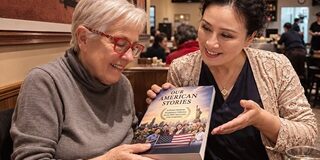
谈到⽂化交流,我忽然想起随⾝携带的⼀本《我们的美国故事》英⽂版新书。
这本书刚刚在洛杉矶举⾏过新闻发布会,拿到⼿还不到⼀个星期。
我兴致勃勃地把它拿出来,向Sandy介绍这部纪念美国建国250周年的华⼈移民纪实⽂学⽂集。
我告诉她,这是来⾃不同背景的华⼈移民⽤亲⾝经历写下的美国故事。我们把其中部分作品翻译成英⽂,就是希望更多美国朋友能够了解华⼈移民如何在这⽚⼟地上⽣活、奋⽃,以及他们对美国社会的贡献。
Sandy⽴刻表现出浓厚的兴趣。
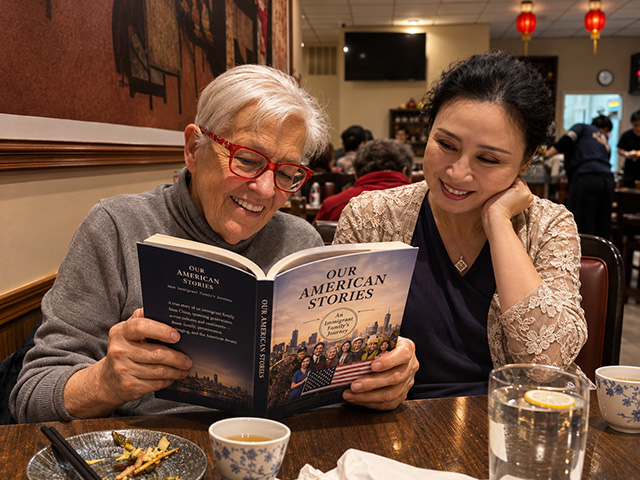
她接过书,翻开⽬录,很快找到了我的⽂章。接下来的⼏分钟,她专注地阅读,偶尔抬头询问,偶尔点头思考。
那⼀刻,我突然有⼀种特别的感动。
当初,我们花费⼤量时间组织翻译、校对和编辑,只是希望这些⽂字能够⾛出中⽂读者圈,进⼊更⼴阔的美国社会。⽽现在,在旧⾦⼭⼀家普通的中国餐馆⾥,⼀位研究和报道美国多元族裔社会数⼗年的资深记者,正在认真阅读这部刚刚出版的英⽂⽂集。
⼀本书的真正价值,不仅在于它被出版,更在于它能够找到愿意阅读、愿意思考、愿意理解它的⼈。
这不正是我们翻译《我们的美国故事》的意义所在吗?
更让我意外的事情,紧接着发⽣了。
从⼀本书,到⼀尊尚未诞⽣的青铜雕像
Sandy读完我的⽂章之后,对我和浦瑛谈起了⼀位她⼗分敬重的⼥性朋友。那是⼀位在美国社会颇有影响⼒的⼥性领袖,已经⼋⼗多岁,不久前刚刚离世。
Sandy认为,这位⼥性的贡献值得被永久纪念。她表⽰,愿意向相关机构推荐我的雕塑创作,看看是否有机会让我为这位杰出的⼥性制作⼀尊纪念青铜雕像。
听到这⾥,我既惊讶,又感动。
谁能想到,⼀次平常的晚餐,⼀段关于艺术与⼈⽣的交流,⼀本刚刚出版的英⽂书,竟然会让⼀位美国资深记者产⽣这样的想法!
当然,从⼀个美好的提议,到⼀尊真正完成的雕像,还需要许多条件与努⼒。此刻,⼀切还只是善意的推荐与期待。但对我来说,这份信任本⾝已经⼗分珍贵。
因为雕塑并不仅仅是再现⼀个⼈的外貌。真正有⽣命⼒的⼈物雕塑,应当让观众透过⾯容、神态与姿态,感受到⼈物的精神、品格和时代价值。
⼀尊纪念雕像可以让逝去的⼈继续被⼈们看见,但更重要的是,它能让后⼈理解:这个⼈为什么值得被纪念?尤其是那些曾为社会进步、公共事业、⽂化教育作出贡献的⼥性,她们的故事与精神,更值得通过艺术传承下去。
我想起⾃⼰多年来创作历史⼈物和纪念性雕塑的经历。从美国独⽴历史题材的⼤型浮雕,到不同⽂化背景的⼈物雕像,我越来越深刻地感受到:
⼀位艺术家的作品能够跨越国界获得认可,靠的不只是艺术技巧,更是作品能否进⼊另⼀个民族的历史记忆,获得⼈们精神上的认同。
这也是我作为⼀位美籍华裔艺术家,始终希望坚持的创作⽅向。
第⼀本英⽂新书,送给了真正的有缘⼈
晚餐临近结束时,我决定把⾃⼰随⾝带来的这本《我们的美国故事》英⽂版新书送给Sandy。
这是我获得的第⼀批英⽂版新书中,送给美国朋友的第⼀本。
送出这本书时,我⼼⾥有⼀种特别的欣慰。
从洛杉矶的新书发布会,到旧⾦⼭的这场晚餐,短短⼏天,⼀本书竟然完成了⼀次如此⾃然、如此有意义的⽂化旅⾏。
它原本属于⼀群华⼈移民的集体记忆,如今却⾛进了⼀位美国资深媒体⼈的阅读世界。
我突然明⽩,⽂化传播不⼀定总是发⽣在隆重的国际会议或⼤型学术论坛上。有时候,它就发⽣在⼀张普通的餐桌旁,发⽣在⼀次朋友间的交谈中,发⽣在⼀个⼈愿意认真倾听另⼀个⼈的故事的瞬间。
如果说,浦瑛与周爱琴⼤姐⼗多年后的重逢,是⼀段历久弥新的友情;那么,我与爱琴的⼀见如故,是艺术带来的知⾳之缘;⽽与Sandy的相遇,则让我感受到⽂字、艺术与不同⽂化之间奇妙的连接。
这⼀天,我遇见了两位值得尊敬的⼥性。⼀位长期致⼒于东西⽅⽂化教育;⼀位毕⽣关注美国族裔媒体和多元社会。她们虽然从事不同的⼯作,却有⼀个令⼈敬佩的共同点:都愿意⽤⾃⼰的知识、经验和社会影响⼒,推动不同⽂化之间的理解。
⽽我,作为⼀位华裔艺术家,也正努⼒⽤绘画、雕塑和⽂字,做着同样的事情。我们⾛的是不同的道路,却似乎在某个地⽅相遇了。
⼈⽣最美的风景,是⼈与⼈之间的理解
回想这趟从洛杉矶到旧⾦⼭的旅程,太平洋的壮丽、海岸公路的蜿蜒、加州⼭海之间的⾃然风光,依然历历在⽬。
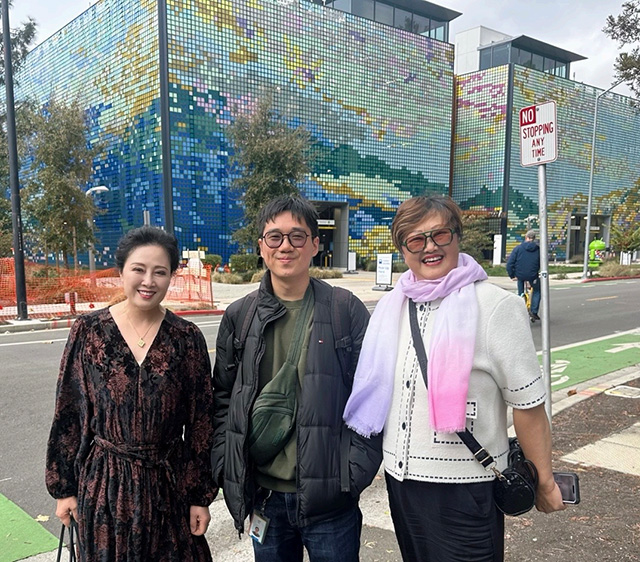
可是,真正留在我⼼⾥的,不只是那些美丽的景⾊。还有浦瑛与⽼友重逢时的喜悦,周爱琴谈论艺术时的热情,以及Sandy Close拿着英⽂新书认真阅读的神情,中国第六代著名导演⽥曦请我们吃唐⼈街早餐,参观博物馆,硅⾕年轻⼯程师 Jack liu 带我们⾛进⾕歌参观他们的⼯作环境,体验他们的午餐等等。
这些细节,让我对友情、艺术和⽂化交流有了更深的感悟。⼈⽣中的机缘,有时就像艺术创作。
我们可以预先设计⼀件作品的构图,却⽆法完全预知每⼀种⾊彩相遇时,会产⽣怎样奇妙的变化。
我们可以计划⼀次旅⾏的路线,却⽆法预先知道,在旅途的哪⼀个转弯处,会遇见怎样的⼈。
我想,真正的缘分,从来不是偶然的热闹,⽽是不同⼈⽣经历在某个时刻产⽣的精神共鸣。
⼀本书跨越语⾔,是为了让更多⼈听见我们的声⾳。
⼀件艺术作品跨越国界,是为了让更多⼈理解我们的情感。
⼀份友情跨越年龄、⽂化与⾝份,则是为了让我们相信:⼈与⼈之间的真诚理解,永远有超越偏见和隔阂的⼒量。
美国是⼀个由不同族裔、不同⽂化共同塑造的国家。华⼈移民不仅是这个国家历史的亲历者,也是它的建设者、创造者和⽂化叙事者。
我们既可以⽤⽂字记录⾃⼰的美国故事,也可以⽤艺术把这些故事刻进历史。
真正的⽂化融合,不是让⼀种⽂化消失在另⼀种⽂化之中,⽽是让不同⽂化彼此照亮,共同丰富⼈类⽂明。这次旧⾦⼭之⾏,让我更加相信这个道理。
我与浦瑛原本只是结伴赏风景、会朋友,却意外收获了两份珍贵的友情,也让⼀本刚刚出版的英⽂新书,找到了能够理解它的读者。
⾄于Sandy提起的那尊尚未诞⽣的青铜雕像,未来是否有机会实现,我不知道。但我相信,⼀颗真诚的种⼦,只要落在理解与信任的⼟壤⾥,就可能在未来的某⼀天,开出意想不到的花朵。
⼈⽣有缘,艺术有缘,⽂字有缘。
我和《我们的美国故事》英⽂版新书,就这样在旧⾦⼭,遇见了有缘⼈。
⽽我更愿意相信:⼀本书最好的命运,是被真正读懂;⼀件艺术作品最⾼的荣誉,是被不同⽂化的⼈们共同珍惜;⼀段友情最美的意义,是让彼此的⼈⽣因为相遇⽽更加丰盈。
这,就是我这次旧⾦⼭之⾏,收获的最珍贵的礼物。
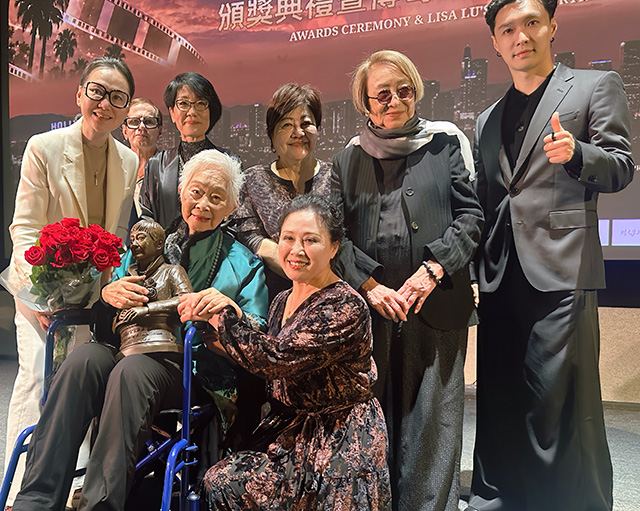
How the English Edition of Our American Stories and I Found Kindred Spirits
An Artistic Journey from Los Angeles to San Francisco, Unexpected Encounters, and a Friendship Across Cultures and Languages
Some encounters in life are reunions arranged long ago; others are delightful surprises that fate seems to place in our path when we least expect them.
A newly published book, an impromptu journey, and several strangers who felt like old friends from the moment we met came together to create a story as remarkable as it was heartwarming.
What surprised me most was that I had set out with a copy of the newly released English edition of Our American Stories, simply intending to enjoy the scenery of San Francisco and visit friends. Instead, I met kindred spirits who understood my art and appreciated the stories of Chinese Americans.
Looking back, the entire journey had something of the magic of a film.
1. A New Book Opens the Door to an Unexpected Journey
At noon on October 29, 2026, a celebratory launch for the English edition of Our American Stories, a collection of true-life literary narratives commemorating the 250th anniversary of American independence, was held at the Shanghai Tan Restaurant in Hacienda Heights, Los Angeles.
Developed through the joint efforts of the U.S.–China Peace and Friendship Association and the Los Angeles Chinese Writers Association, the anthology brings together the experiences and reflections of Chinese immigrants living in the United States. Of more than 130 submissions, 93 were selected for the Chinese edition, and works by 54 of those authors were subsequently chosen for translation and publication in English.
As the organizer and coordinator of the English translation, I worked alongside my colleagues on the translation team at New York World Art Press and Professors Feng Chen and Rongxin Zhao, who undertook the final review. Together, we experienced every step of carrying these stories from Chinese into English.
I knew that this undertaking was far more than the translation and publication of a book. It was an effort to preserve collective memory across languages, cultures, and generations.
Our generation of Chinese immigrants arrived in America with dreams in our hearts. On unfamiliar soil, we worked, built lives, and started businesses. There was laughter and there were tears; there were successes and setbacks. Many stories that might seem ordinary actually reflect the profound social changes of an era.
Without a written record, these experiences might gradually fade with time. And if they remained available only in Chinese, many Americans from other cultural backgrounds might never have the opportunity to know them.
I was especially moved by a remark from Mr. Lu Qiang, the anthology’s chief planner:
“The stories of Chinese Americans have always been part of the American story.”
Those words not only capture the original purpose of the book; they also strengthened my conviction about the importance of publishing an English edition.
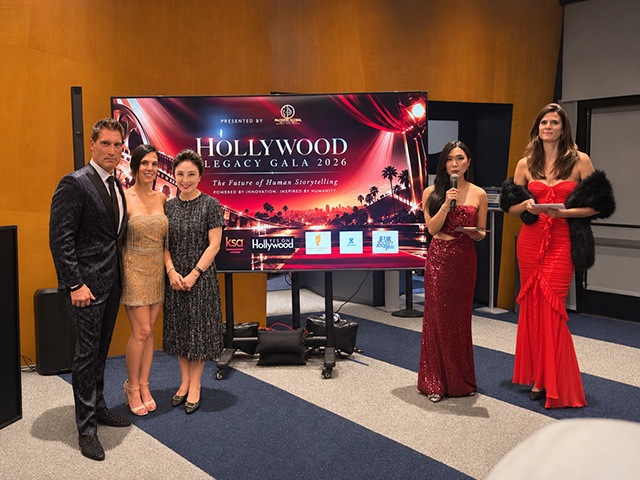
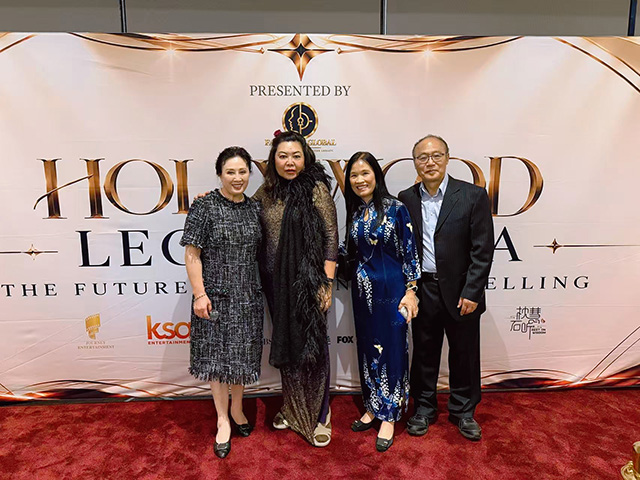
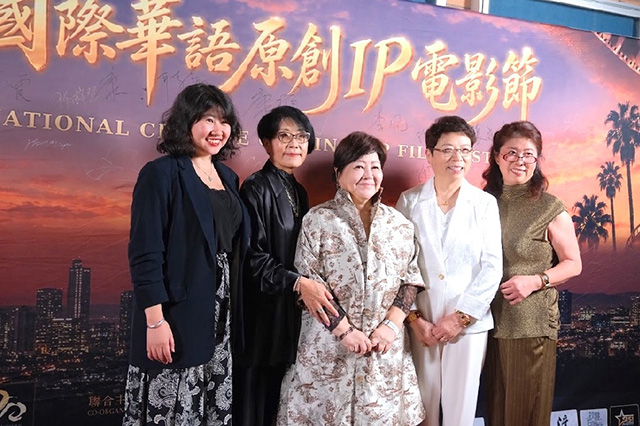
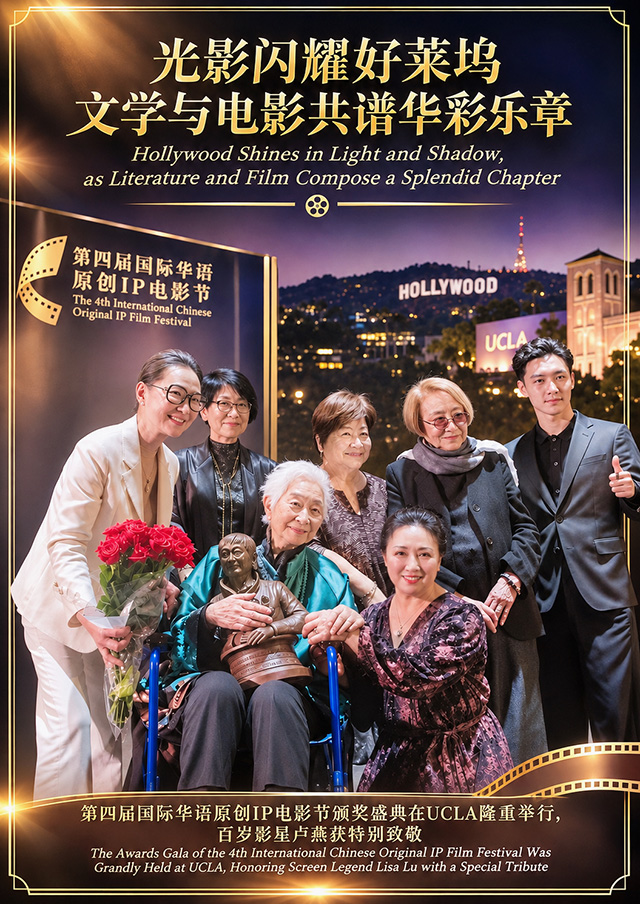
After attending the Fourth International Chinese-Language Original IP Film Festival and the launch of Our American Stories in Los Angeles, I joined Ying Pu, founder of the Chinese-language newspaper Yili Huabao and a veteran media professional, for a drive to San Francisco along California’s picturesque Highway 1.
We admired the magnificent Pacific Ocean, watched the distant horizon where sea and sky appeared to meet, and took in the changing colors of mountains, bays, and clouds. Two women who love life, art, and storytelling, we talked about painting, cinema, and the course of our lives, laughing all along the way.
As our car traveled along the coastal road, it felt as though we were driving into an oil painting that unfolded endlessly before us.
Then Ying said to me, with an air of mystery:
“There’s another special surprise waiting for us in San Francisco!”
I asked what she meant.
She was about to reunite with an old friend she had not seen for more than a decade: Aiqin Zhou, whom she affectionately called her elder sister.
2. A Reunion After More Than a Decade Brings Me a Kindred Spirit in Art
At the Asian Art Museum in San Francisco, we met Aiqin Zhou, who was already waiting for us.
The joy of two old friends reuniting after more than ten years scarcely needs describing. The warmth and excitement between Ying and Aiqin were so infectious that I, standing beside them, was deeply moved as well.
To my surprise, Ying’s reunion with an old friend also brought a new kindred spirit into my own life.
Aiqin has long devoted herself to Asian culture and education. She once helped advance academic programs concerning East Asian and Western cultures at the University of California, Berkeley, and she now teaches courses at the Asian Art Museum.
Because we both work in the arts, it took only a few words for us to feel an immediate connection. Of the three of us, Ying was the youngest and the tallest. Her beloved “elder sister” Aiqin, as it turned out, was actually my contemporary—and three months younger than I am.
Our conversation flowed from traditional Chinese art to modern Western art, from differences in cultural aesthetics to art education, and from the expressive languages of painting and sculpture to the life experiences of women artists. One topic naturally led to another.
I told her about my many years of painting and sculpting, particularly the monumental bronze reliefs I had created depicting figures and pivotal events in American history, as well as my exploration of how art can preserve the shared memories of different peoples.
She, in turn, shared the observations and insights she had gained through her long career in Asian cultural education.
The more we talked, the more absorbed we became. It felt less like a first meeting than a reunion after a long separation.
It suddenly struck me that the true distance between people is not determined entirely by time or geography, but by the worlds they carry within themselves.
We may know some people for decades and never manage to connect deeply. Yet with others, a first meeting—and a glance, a sentence, or a work of art—is enough to awaken a profound resonance of thought.
This is the special power of art: it allows people whose lives have taken very different paths to meet in the realm of the spirit.
That day, I shared more than my artistic experiences. I also gained a sincere new friendship.
3. How a Chinese Dinner Unexpectedly Became an Interview About Art
That evening, an even more amusing encounter awaited us.
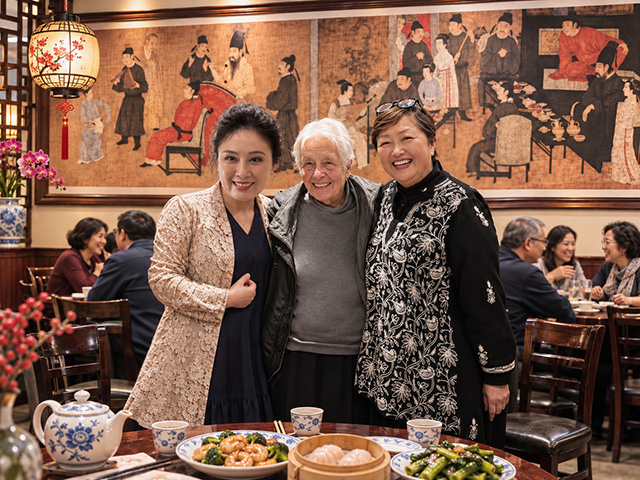
One of Ying’s longtime friends in the media, the distinguished veteran American journalist Sandy Close, warmly invited us to dinner at a Chinese restaurant.
Sandy, whose given name is Alexandra Close, is an accomplished journalist who has spent many years examining American society, ethnic cultures, and the development of the media.
She served for many years as executive director of Pacific News Service and New America Media and has been an influential advocate for ethnic and community media in the United States.
Her late husband, the historian and sociologist Franz Schurmann, taught at the University of California, Berkeley, for 38 years and was renowned for his scholarship on modern Chinese history and international politics.
Through their respective professional endeavors, both helped deepen American society’s understanding of Asia, and of China in particular.
Although Sandy is now in her eighties, she remains energetic, quick-witted, and full of curiosity.
When old friends gather, laughter comes naturally.
We assumed it would simply be an easygoing and enjoyable dinner.
But when Ying began telling Sandy about my artistic career—my decades of painting and sculpture, and especially my bronze reliefs devoted to American historical themes—Sandy’s eyes suddenly lit up.
The veteran reporter was clearly intrigued.
She began asking one question after another. How had the sculptures been made? Why had I chosen American history as my subject? How had a Chinese American woman artist managed to carry out artistic projects on such a monumental scale in the United States?
The questions just kept coming.
As I answered, I could not help laughing.
I thought to myself: perhaps a journalist never truly retires from the habits of her profession!
Although Sandy had retired, her keen powers of observation, her curiosity about people’s stories, and her determination to get to the heart of things had not diminished in the slightest.
Ying was enjoying it all too, occasionally adding details about my artistic journey.
Before we knew it, what was supposed to be an ordinary Chinese dinner had turned into an extraordinary interview with an artist.
And I, who had arrived simply as a dinner guest, unexpectedly found myself the subject of an impromptu interview by two seasoned media professionals.
There was both laughter and thoughtful reflection around the table.
We discussed how Chinese American artists could gain greater visibility in mainstream American culture, how art could represent history, and why an immigrant artist might feel such a deep creative attachment to the history of American independence.
To my mind, an artist’s worth is measured not only by the praise their work receives, but also by whether that work can move beyond the boundaries of cultural identity to express emotions and ideas that people everywhere can understand.
Art may be rooted in a particular culture, but there should be no walls around the human spirit.
I was born in China and later became an American citizen. My art carries the aesthetic memories of Eastern culture, while also embodying the understanding I have developed through observing American history and society.
I hope my works can serve as bridges, enabling people of different cultural backgrounds to discover one another through history and art.
That evening, I saw in Sandy’s eyes the possibility of precisely that kind of cross-cultural understanding.
4. An English-Language Book Takes the Story in Another Direction
As our conversation turned to cultural exchange, I suddenly remembered the copy of the English edition of Our American Stories that I had brought with me.
The book had been launched in Los Angeles less than a week earlier, and I had only just received my copy.
I eagerly took it out and introduced Sandy to this collection of true stories by Chinese immigrants, published to commemorate the 250th anniversary of American independence.
I explained that the book contains accounts of American life written from the firsthand experiences of Chinese immigrants of many different backgrounds. We had translated selected pieces into English in the hope that more American readers would come to understand how Chinese immigrants have lived and worked, struggled and persevered on this land, and contributed to American society.
Sandy immediately showed great interest.
She accepted the book, opened the table of contents, and quickly found my essay.
For the next several minutes, she read intently, occasionally looking up to ask a question or nodding thoughtfully.
I was unexpectedly moved by that moment.
We had spent so much time coordinating the translation, proofreading, and editing because we hoped these stories would travel beyond the Chinese-reading community and reach the wider American public.
And now, in an ordinary Chinese restaurant in San Francisco, a veteran journalist who had spent decades studying and reporting on America’s diverse ethnic communities was reading our newly published English-language anthology with genuine attention.
The true value of a book lies not merely in its publication, but in its ability to find someone willing to read it, reflect on it, and understand it.
Was that not the very reason we had translated Our American Stories?
And then something even more unexpected happened.
5. From a Book to a Bronze Sculpture Yet to Be Created
After reading my essay, Sandy began telling Ying and me about a female friend whom she had greatly admired.
This friend had been an influential woman leader in American society. She was in her eighties and had passed away only recently.
Sandy believed that her contributions deserved to be permanently commemorated. She said she would be willing to recommend my sculptural work to the relevant organizations to explore whether I might have an opportunity to create a memorial bronze sculpture honoring this remarkable woman.
I was both astonished and deeply touched.
Who could have imagined that an ordinary dinner, a conversation about art and life, and a newly published English-language book would inspire such an idea in an esteemed American journalist?
Of course, much must happen between a generous proposal and the completion of an actual sculpture. At this stage, it was no more than a kindly recommendation and a shared hope.
Yet for me, the trust behind her suggestion was already a precious gift.
After all, sculpture is not simply a matter of reproducing a person’s appearance.
A portrait sculpture with genuine vitality should allow viewers to perceive, through its subject’s features, expression, and bearing, something of that person’s spirit, character, and significance to the times in which they lived.
A memorial statue can keep a departed person visible to future generations. More importantly, it can help those generations understand why that person deserves to be remembered.
This is especially true of women who have contributed to social progress, public service, culture, and education. Their stories and ideals deserve to be carried forward through art.
I thought back to my many years of creating historical portraits and commemorative sculptures.
From monumental reliefs depicting America’s struggle for independence to sculptures of individuals from diverse cultural backgrounds, I have come to understand something ever more deeply:
For an artist’s work to win recognition across national borders, technical skill alone is not enough. The work must also be able to enter the historical memory of another people and earn a place in their hearts and minds.
That is the artistic path I have always hoped to follow as a Chinese American artist.
6. The First English Edition I Gave Away Found the Right Reader
As dinner drew to a close, I decided to give Sandy the copy of the English edition of Our American Stories that I had brought with me.
Of the first copies I received, it was the very first one I gave to an American friend.
I felt a special sense of satisfaction as I handed her the book.
In just a few days, from the launch event in Los Angeles to this dinner in San Francisco, the book had made a cultural journey that felt both wonderfully natural and deeply meaningful.
It had begun as part of the collective memory of Chinese immigrants. Now it had entered the reading world of a distinguished American journalist.
I suddenly realized that cultural exchange does not always happen at grand international conferences or major academic forums.
Sometimes it takes place across an ordinary dinner table, in a conversation between friends, or in the instant when one person chooses to listen attentively to another person’s story.
If the reunion between Ying and Aiqin after more than a decade represented a friendship that had endured the years, my immediate rapport with Aiqin was the meeting of two kindred spirits through art. And my encounter with Sandy revealed the remarkable connections that can arise among literature, art, and different cultures.
That day, I met two women worthy of great respect.
One had devoted many years to education and cultural understanding between East and West; the other had spent her life focusing on ethnic media and the diversity of American society.
Though they worked in different fields, they shared something admirable: each was willing to use her knowledge, experience, and influence to promote understanding across cultural boundaries.
As a Chinese American artist, I too have been trying to pursue that same purpose through painting, sculpture, and writing.
We had traveled different roads, yet somehow those roads had converged.
7. Life’s Most Beautiful Scenery Is the Understanding We Find in One Another
When I look back on our journey from Los Angeles to San Francisco, I can still vividly picture the grandeur of the Pacific Ocean, the winding coastal highway, and the natural beauty of California’s mountains and shores.
Yet what remains most deeply in my heart is more than the beauty of those landscapes.
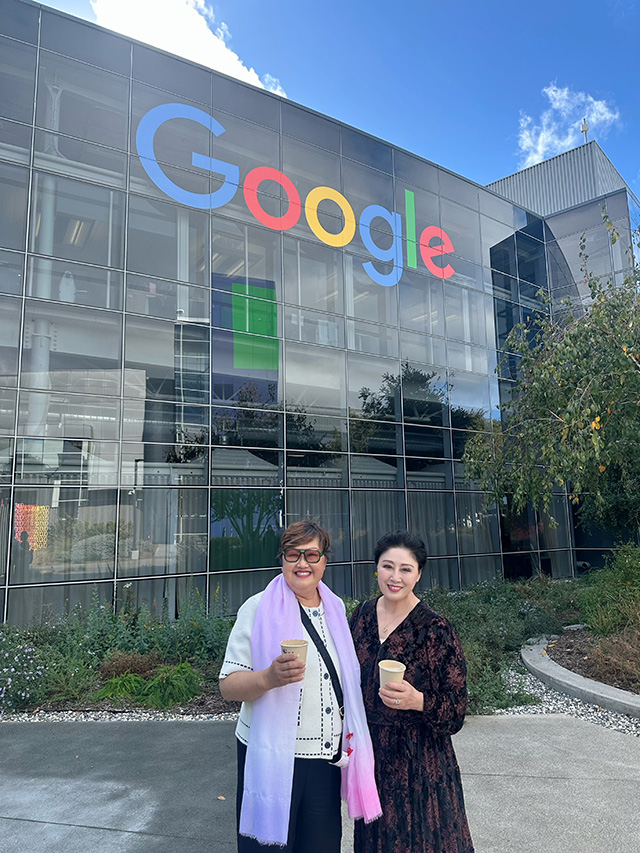
I remember the joy on Ying’s face as she reunited with an old friend, Aiqin’s enthusiasm as she spoke about art, and the expression of concentration on Sandy Close’s face as she read the English edition of our new book.
These moments deepened my understanding of friendship, art, and cultural exchange. The unexpected connections we make in life can sometimes resemble the act of creating art.
We can plan the composition of a work in advance, but we cannot fully predict the wonderful changes that may occur when different colors come together.
We can map out a journey, but we cannot know whom we will meet around the next bend in the road.
I believe that a true bond is more than the fleeting excitement of a chance encounter. It is the moment when people with different life experiences discover a meeting of minds and spirits.
A book crosses a language barrier so that more people may hear our voices.
A work of art crosses national borders so that more people may understand our feelings.
And a friendship that transcends age, culture, and identity reminds us that sincere understanding between people will always have the power to overcome prejudice and division.
The United States is a nation shaped by people of many ethnicities and cultures. Chinese immigrants have not only witnessed its history; they have also helped build the country, create its culture, and tell its stories.
We can record our own American stories in words, and we can also carve those stories into history through art.
Genuine cultural integration does not mean that one culture must disappear into another. It means that different cultures illuminate one another and, together, enrich human civilization.
My visit to San Francisco strengthened my belief in that truth.
Ying and I had set out simply to enjoy the scenery and see friends. Instead, I came away with two precious new friendships, and a newly published English-language book found a reader who could truly appreciate it.
As for the bronze sculpture Sandy spoke of—the one that has yet to come into being—I do not know whether the opportunity to create it will ever arise. But I believe that when a seed of sincerity takes root in the soil of understanding and trust, it may one day blossom in the most unexpected way.
There are kindred spirits to be found in life, in art, and in the written word.
And so it was that the English edition of Our American Stories and I found kindred spirits in San Francisco.
More than anything, I believe that the best fate a book can have is to be truly understood; the highest honor a work of art can receive is to be cherished by people from different cultures; and the deepest beauty of friendship is that our lives become richer because our paths have crossed.
That was the most precious gift I brought home from San Francisco.
相关链接:
正义与法治之光中前行——联合国妇女地位委员会第七十届会议亲历记
BIBS 波士顿国际商学院 商界精英World Speakers Series 论坛 纽约专场 11/24少量门票预订 register here:
预订www.GHYTV.com register here:

著名歌手汪峰 震撼登陆美国! 感恩节连唱两场/地平线北美演唱会 11/25康州金神体育馆 /11月28日拉斯维加斯 订票 7322165001/9177052606 www.GHYTV.com
加州科技大学毕业典礼暨BIBS–FF–CSTU人工智能与机器人工程学院正式成立|AI × Robotics × MBAv1/ BIBS 波士顿国际商学院
3万美元读美国MBA|加州科技大学毕业典礼暨BIBS–FF–CSTU人工智能与机器人工程学院正式成立|AI × Robotics × MBA」/BIBS 波士顿国际商学院/商界精英/世界领袖论坛纽约专场 11/24/ /少量门票预订www.GHYTV.com


