

著名大法律师 -Dr. Ugoji A. EzeEngr. Aja Eze基金会创始人、CEO;英格兰、威尔士、尼日利亚大律师;非洲律师协会人权法及宪法委员会主席;纽约市律师协会、国际犹太律师协会、美国公共管理学会会员Ugoji A. Eze博士是著名的大律师和反恐与安全领域专家,专长涵盖国家与网络安全、人工智能、数据隐私以及国际人权法、人道法。她长期参与联合国全球政策对话并主持多项高级别会议,在疫情后复苏、应对气候变化、食品安全、女性权益、人工智能方面贡献良多。她曾担任联合国妇女地位、和平与安全非政府组织委员会成员,曾代表联合国委员会参与国际法会议。她著述丰富,并积极在国际平台发声,推动人权、性别平等、青年赋能及全球和平与安全,其专业贡献获得多项国际表彰,包括纽约市亨廷顿 Her Hero 终身成就奖。
分享主题 10/30.:/Presentation topic / Talk topic
Different Demographic Realities,
Shared Social Challenges
Intergenerational Solidarity, Care and Social Protection
Proposed inter-regional dialogue in connection with CSocD65 | February 2027
Working draft for discussion. This document is a preliminary proposal, not a confirmed United Nations event.
Organizing institutions and partners will be determined at a later stage.
I. Context and Background
Population change is reshaping social development, but not in the same way or at the same pace across
regions. Chile and several Latin American and Caribbean countries are experiencing sustained fertility decline
and rapid population ageing. Nigeria and many other African countries have younger age structures and higher
fertility, while also facing the need to anticipate longer-term growth in their older populations. These
contrasting transitions create shared questions about inclusion, intergenerational equity, social protection,
and the organization of care.
The priority theme of the sixty-fifth session of the Commission for Social Development (CSocD65) provides an
opportunity to consider intergenerational approaches to sustainable social development. This proposed
dialogue builds on, but is distinct from, the CSocD64 (2026) discussion of resilient care and support systems:
its central focus is how societies at different demographic stages can plan equitably across the life course.
Care must be considered without assuming that ageing necessarily entails dependency, or that younger family
members—particularly women—should automatically provide support. Older persons are also workers,
caregivers, community leaders and knowledge-holders. Public policies must promote autonomy, meaningful
participation and the effective exercise of rights throughout the life course. Receiving assistance must not be
equated with losing decision-making authority.
II. Purpose of the Forum
To convene an inter-regional, human rights–based policy dialogue on how differing demographic transitions
affect intergenerational relationships, social protection and care, and to identify practical, inclusive responses
relevant to Africa, Latin America and the Caribbean.
III. Rationale for the Seminar
Demographic change affects the balance between generations, the size and composition of households, labor
markets, public financing, access to health and long-term support, and the capacity of communities to provide
mutual assistance. The direction and urgency of these effects differ by country. An inter-regional comparison
can therefore avoid one-size-fits-all solutions while identifying transferable principles.
CSocD65 2027 • Concept Note • Working draft
The 2026 concept note foregrounded the invisibility of paid and unpaid care and the need for resilient support
systems. The proposed 2027 forum advances that discussion by asking how demographic foresight,
participation across generations and fair sharing of responsibilities can shape future-ready social policies. It
also creates space for caregivers and persons receiving support to contribute lived expertise, rather than being
discussed solely as beneficiaries.
IV. General and Specific Objectives
General Objective
To promote intergenerational, rights-based and demographically informed approaches to social development,
social protection and care through exchange among regions experiencing different population transitions.
Specific Objectives
• Compare selected demographic trends—population ageing, fertility change and evolving household
structures—in Chile, Nigeria and other participating countries, while recognizing within-region diversity.
• Examine implications for social protection, economic security, care and support, labor participation,
gender equality, disability inclusion and the rights of older persons.
• Identify ways to strengthen intergenerational participation and solidarity without transferring
disproportionate care responsibilities to women or families.
• Recognize caregivers and community organizations as knowledge partners in the design, implementation
and evaluation of social policies, not solely as providers of personal testimony.
• Develop actionable inter-regional recommendations and explore voluntary, shared-responsibility
cooperation that supports existing national initiatives and avoids overburdening participating
organizations.
V. Proposed Thematic Sessions
1. Different demographic pathways
A comparative overview of population ageing, fertility and family change, distinguishing current needs from
long-term projections.
2. Social protection across the life course
How pensions, income security, healthcare, disability support, childcare and long-term care can respond to
changing needs.
3. Intergenerational solidarity without gender inequality
Sharing responsibilities among the State, communities, employers and families; recognizing paid and unpaid
care and protecting autonomy.
4. Participation, lived experience and future planning
Caregivers, younger and older persons, and persons requiring support as contributors to public policy; local
innovations and cross-regional learning..
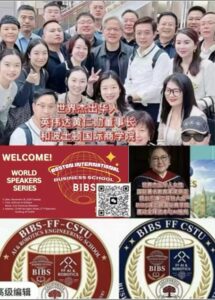
BIBS 波士顿国际商学院/商界精英 World Speakers Series论坛纽约专场11/24/ /少量门票预订register here
纽约2026大型庆圣诞&新年晚会12/19..热诚欢迎各界文化艺术家,文艺团队,舞蹈,歌剧,演唱专才和社区侨团组织,工商企业团体,广告商,赞助商加盟. 晚会活动欢迎报名参加.
报名联系电话:7322165001. 9177052606. .
加州科技大学毕业典礼暨BIBS–FF–CSTU人工智能与机器人工程学院正式成立|AI × Robotics × MBAv1/ BIBS 波士顿国际商学院
https://youtu.be/oWREB_lBUIw /。
BIBS 波士顿国际商学院/商界精英论坛纽约专场11/24/ /少量门票预订www.GHYTV.com
3万美元读美国MBA|加州科技大学毕业典礼暨BIBS–FF–CSTU人工智能与机器人工程学院正式成立|AI × Robotics × MBA」/BIBS 波士顿国际商学院/商界精英论坛纽约专场11/24/ /少量门票预订www.GHYTV.com
 著名歌手-汪峰—地平线北美演唱会一康州金神体育馆
 纽约法拉盛桐灿坊-中医调理纽约法拉盛联系Selinna 6468973286 微信. 地址3370 Prince street. #508. Flushing NY

彭丹(Diana Peng) 著名国际影后荣获终身艺术家成就奖小金人国际电影节好莱坞3D电影集团www GHYTV.com/ Video link
https://youtu.be/NK184oKOblo /
https://youtu.be/OxlNSPqKbYc.
Video link
https://youtu.be/c4ei1eW2aQw
https://youtu.be/qAySofdcB0g
纽约知名童星Richard Tang (唐文豪) 演唱美国国歌纽约布鲁克林–唐人街共同命名庆典10/23 www GHYTV.com