
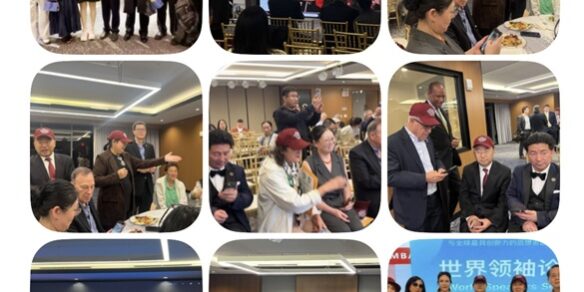
商界精英/世界领袖论坛纽约成功举办!
文/纽约锦声Dr. Jeannie Yi
一、BIBS世界领袖论坛纽约专场成功举办
2026年9月21日晚,波士顿国际商学院(BIBS)世界领袖论坛纽约专场在法拉盛福朋喜来登酒店举行。来自商业、教育、科技、艺术与媒体领域的嘉宾相聚,分享创业经历、专业思考与人生感悟。
对我来说,这是一个既熟悉又充满新意和思想激荡的晚上。BIBS联合创始人、执行院长荣丽雅,是我认识二十多年的老朋友。多年间,我们各自在不同领域奔忙,也见证着彼此的变化。二十多年, 我们的脚印从北京出发, 走过纽约 波士顿 加州 迪拜; 话题也已经从过去各自的金融法律地产行业, 延伸到AI时代的教育、商业与人生未来的选择。
也就是上半场和下半场的故事、 相互促进, 在与同代人继续前行的时候、 也帮助我们的后辈。
荣丽雅教授推动这样的国际交流平台,让不同专业、不同文化背景的人坐到一起, 企业家可以听到学者的思考,艺术工作者可以了解商业实践,年轻人也能从前辈的经历里,看见成功之前那些漫长的摸索和契而不舍,加之一点运气。
活动举办地也让我倍感亲切。纽约世纪集团创始人徐家鹏(George Xu)和 Lily 都是我们的好朋友。从房地产开发到酒店经营,George 多年扎根纽约,把一个个项目做成可以看见、可以走进去的空间,植根法拉盛, 让这个晚上,朋友们就在这样的空间里相聚。交流。
赵云龙博士担任当晚活动的共同主席。他也是世界收藏家联盟的创始共同主席,是我们很多人共同的朋友。他带来的演讲《从打架到战略》,从童年的一次失败讲起,为这一晚关于事业与人生的讨论,打开了一个生动的入口。
我也带着自己的经历和问题来到这里。从大学讲台到华尔街,从写《海尔之路》到参与电影电视制作,每一次转向,都让我重新学习。今天,AI又把许多新的可能摆到面前:我们怎样运用已有的经验,在人机合一的时代, 不被过去的身份限制?
在这个会场里,对这个问题, 我看到了许多不同的回答,都是那么精彩。
二、新老朋友相会,碰撞思想的火花
有些朋友认识多年,但坐下来认真听他的故事,仍然会发现以前不知道的一面。比如赵云龙的《从打架到战略》,就是这样的故事。
他在内蒙古鄂尔多斯长大。小时候,摔跤和打架是孩子们生活的一部分,而他个子较小、身体较弱,常常吃亏。十四岁时,一次打架失败,一位老师告诉他:既然体力不是你的优势,就应该学习战略。这句话改变了他看待自己的方式。
后来,《三国演义》和《孙子兵法》为他打开了新的世界。他开始理解智慧、远见与判断的力量,也逐渐把这些思考带入求学、创业和国际交流。
我听到这里,想到的是教育对一个人的影响。一个孩子在失败中看见自己的不足,一位老师却帮助他看见了尚未发现的能力。
赵云龙谈知己知彼,谈有利则动、无利则止,也谈不战而胜。对经历过事业起伏的人来说,这些话有很具体的分量。什么时候向前,什么时候等待,什么时候换一条路,都需要判断。人生中的战略,最终体现在我们怎样安排有限的时间与精力。
叶凌宇博士的收藏品大讲堂,则把我们的目光带向了更长的历史。叶老师也 是我的好朋友,也是BIBS艺术及管理研究院院长、国际艺术资产研究院联合创始人。他长期关注瓷器、玉器、琉璃与青铜器。与他交流,我越来越感到,收藏可以成为一门连接艺术、材料与历史的学问。
一件器物背后,有古人对美的理解,也有他们对技术的掌握。材料从哪里来,怎样经过火的锻炼,为什么形成这样的纹饰与造型?认真追问下去,我们就会进入一个比价格丰富得多的世界。
“让器物说话”,是他一直重视的理念。
听懂器物,需要耐心观察,也需要历史知识与证据。叶凌宇的工程背景,使他重视把审美、材料观察与检测结合起来。这也提醒在坐的不少与会者, 无论收藏还是研究,都要愿意学习,愿意比较,也愿意在新的证据面前重新思考。
赵云龙讲一个人怎样找到自己的方向,叶凌宇让我们思考怎样读懂前人留下的文明。两个人从不同的入口,谈到了认识与判断。
其他嘉宾的经历,也让这场交流有了更丰富的层次。比如王平欣博士。
他是Varsal公司的CEO、董事会主席。他从化学研究走向创业,把专业知识转化为产品与企业。活动资料介绍了公司的上市计划,而我更关注的是计划背后的三十多年:科研成果怎样进入市场,一个科学家又怎样承担起经营企业的责任。他的公司。下周即将在纳斯达克敲钟上市。
建筑师 Raymond Chan 长期深耕建筑设计与房地产开发。他的经历让我想到,好的设计需要兼顾美感、功能、成本与长期使用。空间最终要服务于生活,就像事业最终也要落到具体的人和需求上。这也是为什么他刚刚设计完成的法拉盛现代公寓楼, 热卖已经开始。
媒体人、导演与制片人 Joseph Cirnigliaro,以及律师、前纽约市议员 Allan W. Jennings, Jr.,则带来了媒体传播、法律与公共事务领域的经验。他们不仅主持当晚的活动, 还分享自己的人生经验。 由于他们的主持特色, 开放,专业、守时、 不拖沓, 不同职业的人相聚,让同一个问题有了不同的观察角度, 知无不言, 学而实习之。
现场还有三位值得特别写下的媒体人:美国华尔街卫视的季小华、“第一直播”,以及 Mary Yang.。
AI时代, 如今每个人的手机,都可能成为一个“流量池”。拍摄与分享的成本降低了,几乎是零成本, AI又让整理、翻译和制作内容更加方便。但愿意到场、认真倾听、准确表达,仍然需要有心人的投入, 季小华、“第一直播”,Mary Yang.。 他们就是这样的“有心人“, 在中美之间、社区之间、族群之间, 扬善抑恶, 讲好中国人的好故事。 中国人爱听,美国人也爱听。 看着他们在会议上, 忙里忙外, 我想一个人、一个社区、一个族群的成长, 可以持续百年千年, 专业经验能成为新的起点,爱好也可能成为一份有影响力的事业, 但那颗关爱他人的心、 凡事不自私不为己, 那是我们海外华人立命安身的基石。
三、在中美元首会晤前夕,理解民间对话的意义
这场论坛举行之际,中美关系再次成为国际关注的焦点。媒体报道,习近平主席与特朗普总统即将在华盛顿会晤,两国如何保持对话、稳定关系,牵动着商业与社会各界的期待。(reuters.com, apnews.com)这场两国领袖对话, 在BIBS的这个背景下, 我更能体会到民间交流的意义。
对于长期生活在美国、又与中国保持联系的我们, 中美关系就在日常工作与生活中。它关系到企业的合作、学生的求学、家庭的往来,也影响着我们怎样向彼此讲述自己的故事和文化。这也让我特别关注彭丹的参与。
演员Diana 彭丹是我将近20面的好朋友。她14岁就前来纽约茱莉亚音乐学院求学, 一个小留学生, 成长为一家超大跨国集团、保健医疗巨头注意的董事长, 她多重身份与跨界经历所带来的话题,让所有在坐的专家学者企业家文化人, 都反思一个人可以怎样通过自己的天赋、能力、后天的勤奋以及一颗善良的心、 参与更广泛的交流和对话所处的社会。
彭丹的一颗感恩之心, 让她不忘在中美对话的背景中去理解:文化艺术工作者,大有机会通过故事和人与人的交往,让抽象的国家关系变得可触摸的、可感恩、可亲近的个人关系。 她不仅是这样说的, 也是这样做的。 感恩。
我们需要这样的相遇。意见可以不同,经历也可以不同,但愿意坐下来听,就为理解留下了空间。电影是我尤其珍惜的一种交流方式。
唐鹤主席推动的小金人国际电影节已经走过十年。按照目前的安排,十周年活动将于10月10日在法拉盛君豪举办。十年的持续投入,为孩子们接触电影、参与表演与走上红毯创造了机会,也把不同背景的家庭带到一起。作为电影电视制作人,唐主席特别关心孩子们站在镜头前的自信,也关心他们在合作中学会倾听,在故事中认识别人。这样的经验,会成为他们理解世界的一部分,一生永远收益。
中美关系是大事。身处其中,我们也有自己能够做的具体工作:把企业经营好,把交流组织好,把一个故事讲清楚,把一段友情维护好。
回想这个晚上,我记得赵云龙十四岁时的转折,记得叶凌宇对器物的关注,也记得朋友们围坐交谈、举起手机记录的身影。二十多年的老朋友与刚刚认识的许多新朋友——请原谅我不能一一讲述你们的生命之旅和感动心窝的故事, 在同一个时空里分享经验,也给彼此带来新的思想的光。
这就是我愿意写下这场论坛的原因。世界变化很快,而我们依然可以通过一次真诚的相聚,多理解一个人,多看见一种可能,多建立一个我们能相互理解和拥有的集体记忆!
jeannie 锦声:


Business Leaders / World Speakers Forum Successfully Held in New York!
By Dr. Jeannie Yi, New York
I. BIBS Hosts a Successful New York World Speakers Forum
On the evening of September 21, 2026, Boston International Business School (BIBS) held its New York World Speakers Forum at the Four Points by Sheraton Flushing. Guests from business, education, technology, the arts, and the media gathered to share their entrepreneurial journeys, professional insights, and reflections on life.
For me, it was an evening of familiar faces, fresh perspectives, and stimulating ideas. Professor Gloria Rong Liya, BIBS co-founder and executive dean, has been my friend for more than twenty years. Over those years, we have pursued careers in different fields and witnessed one another’s growth. Our paths have taken us from Beijing to New York, Boston, California, and Dubai. Our conversations have expanded from our respective work in finance, law, and real estate to education, business, and the choices that will shape our lives in the age of AI.
These are the stories of the first and second halves of our lives, each enriching the other. As we continue forward alongside our contemporaries, we also hope to help the generations coming after us.
The international platform Professor Rong has helped build brings together people from different professions and cultural backgrounds. Entrepreneurs can hear scholars’ perspectives; artists can learn about business practice; and younger people can discover the long years of exploration and perseverance, along with a little luck, that often precede success.
The venue also felt especially welcoming. George Xu, founder of New York’s Century Development Group, and Lily are good friends of ours. From real estate development to hotel operations, George has spent years building his business in New York, turning projects into places people can see, enter, and experience. Rooted in Flushing, these spaces gave friends a place to gather and exchange ideas that evening.
Dr. Zhao Yunlong served as co-chair of the event. He is also a founding co-chair of the World Collectors Alliance and a mutual friend of many of us. His presentation, “From Fighting to Strategy,” began with a childhood defeat and offered a vivid opening to the evening’s discussions about careers and life.
I arrived with my own experiences and questions. From the university classroom to Wall Street, from writing The Haier Way to working in film and television, every transition has required me to learn again. Today, AI presents us with new possibilities: How can we draw on our experience without being confined by our former identities as humans and machines work ever more closely together?
In that room, I encountered many different answers, each compelling in its own way.
II. Old Friends, New Friends, and Sparks of Ideas
You can know someone for years and still discover something new when you sit down and truly listen to their story. Zhao Yunlong’s “From Fighting to Strategy” was one such story.
He grew up in Ordos, Inner Mongolia. Wrestling and fighting were part of childhood life, but he was smaller and physically weaker than other children and often came out the worse for it. At fourteen, after losing a fight, a teacher told him: If physical strength is not your advantage, you should study strategy.
That sentence changed the way he saw himself.
Later, Romance of the Three Kingdoms and The Art of War opened a new world to him. He began to understand the power of wisdom, foresight, and judgment, gradually applying these ideas to his education, entrepreneurship, and international exchanges.
Listening to him, I thought about the difference education can make in a person’s life. A child saw his shortcomings in defeat; a teacher helped him recognize abilities he had not yet discovered.
Zhao spoke about knowing yourself and the other side, acting when there is an advantage and stopping when there is none, and winning without fighting. For anyone who has experienced the ups and downs of a career, these principles carry practical weight. Knowing when to advance, when to wait, and when to choose another path requires judgment. Strategy in life ultimately reveals itself in how we spend our limited time and energy.
Dr. Jeff Ye Lingyu’s masterclass on collecting turned our attention toward a much longer history. A good friend of mine, he is also dean of the BIBS Institute of Art and Management and co-founder of the International Institute of Art Assets. His interests have long encompassed porcelain, jade, ancient glass, and bronze. Through our conversations, I have increasingly come to see collecting as a discipline connecting art, materials, and history.
Behind every object lies an earlier generation’s understanding of beauty and mastery of technology. Where did the materials come from? How were they transformed by fire? Why did the makers choose these patterns and forms? Following such questions leads us into a world far richer than price alone.
“Let the objects speak” is a principle he has long valued.
Understanding them requires patient observation, historical knowledge, and evidence. Ye’s engineering background informs his emphasis on combining aesthetic appreciation with the study and testing of materials. His approach reminded many in the audience that collectors and researchers alike must remain willing to learn, compare, and reconsider their judgments when new evidence emerges.
Zhao Yunlong explored how a person finds direction in life. Ye Lingyu invited us to consider how we understand the civilizations that came before us. From different starting points, both addressed questions of understanding and judgment.
Other guests added further dimensions to the conversation. Among them was Dr. Wang Pingxin, CEO and chairman of Varsal.
He moved from chemistry research into entrepreneurship, translating specialized knowledge into products and a business. The event materials introduced his company’s plans to go public. What interested me most were the more than thirty years behind those plans: How does research reach the market? How does a scientist take on the responsibility of running a company? His company is scheduled to ring the bell at Nasdaq and go public next week.
Architect Raymond Chan has devoted many years to architectural design and real estate development. His experience reminded me that good design must balance beauty, function, cost, and long-term use. A space must ultimately serve people’s lives, just as a business must respond to real people and their needs. This helps explain the strong buyer interest already surrounding the modern apartment building he recently completed designing in Flushing.
Media professional, director, and producer Joseph Cirnigliaro, together with attorney and former New York City Council member Allan W. Jennings, Jr., brought experience in media, law, and public affairs. They not only hosted the evening but also shared lessons from their own lives. Their open, professional, and punctual approach kept the program moving. People from different professions could examine the same question from different perspectives, share their knowledge freely, and connect learning with practice.
Three media figures also deserve special recognition: Ji Xiaohua of U.S. Wall Street TV, “First Live,” and Mary Yang.
In the age of AI, each person’s phone can become a source of audience reach and engagement. The cost of taking and sharing photographs has fallen to almost nothing, while AI makes organizing, translating, and producing content easier. Yet showing up, listening carefully, and conveying people’s meaning accurately still require someone who cares.
Ji Xiaohua, “First Live,” and Mary Yang are precisely such people. Across countries, communities, and ethnic groups, they champion what is good, stand against wrongdoing, and tell meaningful stories about Chinese people—stories that both Chinese and American audiences want to hear.
Watching them work tirelessly throughout the event, I thought about how individuals, communities, and cultures continue to grow across generations, centuries, and even millennia. Professional experience can become a new starting point, and a personal interest can develop into influential work. But caring for others and looking beyond our own interests remain the foundation on which we, as Chinese people living overseas, build our lives and our place in society.
III. On the Eve of a U.S.–China Summit, the Meaning of People-to-People Dialogue
As this forum took place, U.S.–China relations were once again drawing international attention. Media reports indicated that President Xi Jinping and President Donald Trump would soon meet in Washington. How the two countries would maintain dialogue and stabilize their relationship was a matter of keen interest to business leaders and society at large. (Reuters; Associated Press)
With that high-level dialogue approaching, our gathering at BIBS gave me an even deeper appreciation of people-to-people exchanges.
For those of us who have lived in the United States for many years while maintaining ties with China, this relationship is part of everyday work and life. It affects business partnerships, students’ education, and family visits. It also shapes how we tell one another our stories and explain our cultures.
That was one reason Diana Peng Dan’s participation meant so much to me.
The actress Diana Peng Dan has been my friend for nearly twenty years. She came to New York at fourteen to study at Juilliard. From a young student abroad, she grew to become chairwoman of a major multinational group in health and wellness. Her many roles and experience across different fields prompted the scholars, entrepreneurs, and cultural professionals present to reflect on how talent, ability, hard work, and a kind heart can enable a person to participate more fully in society and in wider exchanges and dialogue.
Diana’s gratitude keeps her mindful of the human dimension of U.S.–China relations. Artists and cultural professionals have a real opportunity to turn an abstract relationship between nations into personal connections people can feel, appreciate, and cherish through stories and direct encounters. She puts that belief into practice. Gratitude is at the heart of it.
We need encounters like these. Our opinions and experiences may differ, but a willingness to sit down and listen creates room for understanding. Film is one form of exchange I particularly cherish.
Under Chairman Tang He’s leadership, the Golden Statuette International Film Festival has now reached its tenth year. According to the current schedule, its tenth-anniversary celebration will take place on October 10 at Junhao in Flushing.
Ten years of sustained commitment have created opportunities for children to discover film, perform, and walk the red carpet, while bringing together families from different backgrounds. As a film and television producer, Chairman Tang cares deeply about children’s confidence in front of the camera. He also cares about their learning to listen through collaboration and to understand others through stories. These experiences can shape their understanding of the world and benefit them throughout their lives.
U.S.–China relations matter enormously. Within that larger relationship, each of us has practical work we can do: run a business well, organize a meaningful exchange, tell a story clearly, and nurture a friendship.
Looking back on that evening, I remember Zhao Yunlong’s turning point at fourteen, Ye Lingyu’s close attention to ancient objects, and the sight of friends talking together and raising their phones to record the moment.
Friends of more than twenty years and so many people I had just met—please forgive me for not being able to recount each of your journeys and the stories that touched my heart—shared the same time and place, offering one another experience and the light of new ideas.
That is why I wanted to write about this forum. The world is changing rapidly, yet one sincere gathering can still help us understand another person, recognize another possibility, and create one more shared memory that we can understand and call our own.
j