
收藏家与科学家的对话: 怎样让我爱上了元青花?
作者:纽约锦声博士/华尔街直播间
虽然家里瓶瓶罐罐不少, 但我从来没有收藏过中国古代艺术。我家旁边有个香港超市, 经常卖景德镇烧瓷,看见好看的,我就在买菜的时候,也买上一个“宝贝”,比如青花瓷。
第一次见到叶老师的时候,我和绝大多数人一样,觉得古董的真假,全靠专家的一双眼睛,全靠经验,全靠故事。对我来说,有时假的比真的还好看呢。再说了,把我家附近一群联排别墅都押上,也买不了一个真的元青花——瓷器中的老大。何苦费那神!
直到四月份,我们受波士顿国际商学院院长、好朋友荣丽雅教授的邀请去波士顿参加她的一个活动,可能是受到学术氛围的影响,叶老师觉得要教教我什么是元青花吧, 于是他指着手机上的一个蓝色罐子对我说:
“你知道这些铁锈斑是怎么形成的吗?”
我哪里知道?古董。日子久了呗。
他没有马上告诉我这件瓷器值多少钱,也没有告诉我它哪一年出自哪个前人,他只是让我仔细看看美丽的瓷器身上那些黑褐色的小斑点,有些地方,它们甚至一滴滴顺着器身轻轻流了下来。很神奇。
我说:“The rust spots were actually dripping down the jar.”
无论怎样, 挺神奇的。 越看越有趣。无论如何,这是一件七百年前的瓷器能够延续至今!而在叶老师的眼里,我后来发现那可是七百年前的一次化学反应,因为他接着讲了一句话:“苏麻离青,其实就是一块矿石。在高温下会变成蓝色。”
没有神秘配方。没有祖传秘诀。没有玄学。
就是一块矿石。苏麻离青。盛行于中东。
那一刻,我突然觉得整个世界立马在我眼前变了, 想到高中的化学课。
钻石,本质上主要是碳(Carbon)。铁矿,本质上主要含铁(Iron)。苏麻离青,本质上主要含钴(Cobalt),同时混有铁、锰等天然杂质。
古代工匠并没有实验室,也不知道什么叫化学元素。他们只是把这种苏麻离青矿石一点一点磨成极细的粉末,加水调和,画在瓷器上,再送进大约1300摄氏度的窑炉中烧制。
然而,真正神奇的事情,就在窑火里发生了。钴,在高温中变成了深邃的蓝色。铁,在高温中形成了今天人们所说的“铁锈斑”。釉—工匠涂在泥坯上的一层“皮”慢慢融化,最后凝结成一层透明而坚硬、像玻璃一样的保护层釉,把这一切永久封存在瓷器之中。
叶老师 说:“釉,其实就是烧在瓷器表面的一层天然玻璃。”
这句话又一次让我震惊。原来,我看了买了几十年的真的假的瓷器,却从来没有真正理解过它。我一直以为,工匠是在瓷器表面画画, 然后放进火里烧。就这么简单。
叶老师说并不是。真正的元青花,并不是画在釉上,而是先画在瓷胎上,再覆盖一层透明的釉,最后一起放进窑炉烧制。烧成以后,那层釉已经变成了一层透明的天然玻璃。于是,青花并不是浮在器物表面,而是静静地藏在玻璃下面。透过那层晶莹剔透的釉,我们看到的蓝色,就像隔着一泓清澈的湖水,又叫“鸭蛋青”。
接着,叶老师又把我的目光带回到那些铁锈斑。他说,为什么有些铁锈斑看起来像顺着器物流下来一样?why?
因为在1300摄氏度左右,釉已经不是固体,而是一种缓慢流动的液体。你可以想象,把一滴蜂蜜轻轻倒在玻璃上,它不会一下子流走,而是慢慢移动。釉,也是如此。如果工匠当年调配的苏麻离青比较浓,局部含有更多的钴和铁,那么在高温烧制过程中,这些元素就会随着已经液化的釉层发生轻微流动。于是,你有时候会看到深色的青花像一滴墨,微微向下延伸,仿佛“铁锈”顺着器身流淌下来。
这就是叶老师让我看到的那只他手机上那个元青花罐子的景象, 我当时好震撼。
而他告诉我的道理,也把我拉回到了中学时代死记硬背元素表的年代! 原来我们在青花瓷器上看到的不仅仅是颜料,而是七百年前液态釉层流动留下来的痕迹, 裹着“铁锈”在1300度高温下分解后又自由聚合的铁元素!
它们形成了那么难得一见的“铁锈斑”,让花朵那么饱满美丽厚重。
就在那一瞬间,艺术变成了科学,而我也第一次真正理解了瓷器。
当然也不是真正理解了。叶老师强调如果要真正地理解和判断是否是“元青花”,还有六七个要素,还要结合胎土、釉层、钴料组成、氧化层、老化痕迹、显微结构等多个方面综合判断。用他自己的话说:“从《宏观+微观=器型工艺+纹饰工艺+发色鉴伪+老化痕迹+胎釉底足》=《型+纹+色+痕+胎+釉》。”
那天,我记住的是:今天我们仍然能够看到当年的那一次烧成,那些像铁锈一样的小黑点,是在1300摄氏度的窑火里形成的。这些复杂的化学原理,叶老师几句话就讲明白了。 真正复杂的是七百年的时间。时间改变了矿物。时间改变了釉层。时间留下了氧化、风化和老化的痕迹。
“七百年前,这块矿石在1300摄氏度的窑里,到底发生了什么?”
这就是收藏家与科学家的区别。收藏家欣赏的是器物。科学家追问的是过程。收藏家看到的是美。科学家看到的是证据。
而叶老师恰恰把这两种身份结合在了一起。他不是先教我认识元青花,而是先教我认识一层釉和釉下面覆盖或者裹在一起、你中有我、我中有你的铁锈斑。 真正让这只元青花跨越七百年依然光润如新的,不只是工艺,更是材料科学。
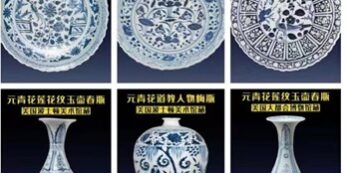
大都会博物馆的元青花
叶老师又不厌其烦地让我看这个元青花的底盘,他说:真麻仓土烧出来的胎体,是老藏家口口相传的糯米胎,白中泛着温润的米黄色泽,像刚蒸好的熟糯米那样细腻滑润。凑近摸能感觉到细微的颗粒感和气孔,放大镜下还能看到星星点点的云母反光,胎色多是灰白带点淡米黄,绝对不是当代高岭土烧出来那种刺眼的死白。此时,叶老师化学本科的劲头出来了: “麻仓土含铁量高达2%至3%,这是火石红与铁锈斑的根源。高温烧制时,胎内铁元素氧化跑到胎釉结合处,形成自然晕散的橘红色或砖红色火石红。”
于是我记住了铁锈斑和火石红。
“这种红是从胎里慢慢沁出来的,边缘过渡自然,绝非人工涂抹的浮红。同样,青花料中的铁锈斑也是天然矿物料自然形成,深入胎骨,摸上去有细微的凹凸感,分布毫无规律。”
鉴定元青花绝不能陷入教条主义。虽然麻仓土特征是核心,但并非所有元青花都有典型的粗糙胎质和浓重火石红,部分馆藏真品胎质相对细腻,火石红十分浅淡。
除了胎质,还要综合考量《绘画神韵、釉面微观与工艺痕迹》。真品画工洒脱豪放,线条苍劲有力,而仿品线条僵硬呆板。
釉面气泡大小不一,疏密有致,修足处有明显的“旋痕和跳刀痕”。
这些历经数百年的岁月痕迹与古代匠人的灵魂,才是仿品永远仿不出的核心。只有摒弃捡漏心理,多看真品实物,摸透时代特征,才能避开赝品陷阱。
从那一刻起,我决定虚心向叶老师这位收藏家兼鉴赏家兼科学家于一身的好朋友学习“古代艺术藏品101”。 不是因为他侃侃而谈,说得神秘兮兮,恰恰相反,是因为他把一件原本神秘莫测的事情,讲成了任何一个普通人都能够理解的科学!
真正的鉴定,从来不是一个人的感觉。真正的鉴定,是材料、化学、物理、历史和时间,共同留下的一份证词。那是七百年前窑火留下来的科学! 那是中国人与生俱来的这份科学DNA,打动了我。
我开始喜欢上收藏。


A conversation between a collector and a scientist: How did I fall in love with Yuan blue and white porcelain?
Author: Dr. Jin Sheng from New York / Wall Street Live Room
Although I have many bottles and jars at home, I have never collected ancient Chinese art. There is a Hong Kong supermarket next to my house that often sells Jingdezhen porcelain. When I see something beautiful, I buy a “treasure” while I’m grocery shopping, such as blue and white porcelain.
When I first met Professor Ye, like most people, I thought that determining the authenticity of antiques relied entirely on an expert’s eye, experience, and stories. To me, sometimes the fakes were even more appealing than the real ones. Besides, even if I mortgaged all the townhouses near my house, I couldn’t buy a single genuine Yuan blue-and-white porcelain piece—the pinnacle of porcelain. Why bother?
Until April, we were invited by Professor Rong Liya, the dean of the Boston International Business School and a good friend, to attend one of her events in Boston. Perhaps influenced by the academic atmosphere, Professor Ye felt he should teach me about Yuan blue and white porcelain. So he pointed to a blue jar on his phone and said to me:
Do you know how these rust spots formed?
How would I know? It’s an antique. It’s just been around for a long time.
He didn’t immediately tell me how much the porcelain was worth, nor did he tell me when it was made or by which artist. He simply asked me to examine closely the small, dark brown spots on the beautiful porcelain. In some places, they were even dripping gently down the surface. It was amazing.
I said, “The rust spots were actually dripping down the jar.”
Anyway, it’s quite amazing. The more you look at it, the more interesting it becomes. In any case, it’s incredible that a piece of porcelain from seven hundred years ago has survived to this day! And in Teacher Ye’s eyes, I later discovered that it was actually a chemical reaction from seven hundred years ago, because he went on to say, “Sumali Blue is actually a mineral. It turns blue at high temperatures.”
There is no secret recipe. There are no ancestral secrets. There is no metaphysics.
It’s just a piece of ore. Sumali blue. Prevalent in the Middle East.
At that moment, I suddenly felt like the whole world had changed before my eyes, and I thought of my high school chemistry class.
Diamonds are primarily composed of carbon. Iron ore is primarily composed of iron. Sumali is primarily composed of cobalt, but also contains natural impurities such as iron and manganese.
Ancient artisans did not have laboratories and did not know what chemical elements were. They simply ground this cobalt blue ore into an extremely fine powder, mixed it with water, painted it on porcelain, and then fired it in a kiln at about 1300 degrees Celsius.
However, the truly magical thing happened in the kiln fire. Cobalt turned into a deep blue at high temperatures. Iron formed what we now call “rust spots” at high temperatures. The glaze—a layer of “skin” that the craftsman applied to the clay body—slowly melted and finally solidified into a transparent and hard, glass-like protective layer, permanently sealing everything inside the porcelain.
Teacher Ye said, “Glaze is actually a layer of natural glass fired onto the surface of porcelain.”
This statement shocked me once again. It turns out that despite buying and selling genuine and fake porcelain for decades, I’ve never truly understood it. I always thought that craftsmen simply painted on the surface of the porcelain and then fired it. It was that simple.
Teacher Ye said no. True Yuan blue and white porcelain wasn’t painted on the glaze, but rather first painted onto the porcelain body, then covered with a layer of transparent glaze, and finally fired together in the kiln. After firing, the glaze had transformed into a layer of transparent natural glass. Therefore, the blue and white design didn’t float on the surface of the object, but rather remained quietly hidden beneath the glass. The blue we see through that crystal-clear glaze is like looking through a clear lake, hence the name “duck egg blue.”
Then, Teacher Ye drew my attention back to the rust spots. He asked, “Why do some of the rust spots look like they’ve flowed down from the vessel?”
At around 1300 degrees Celsius, the glaze is no longer a solid, but a slowly flowing liquid. Imagine gently pouring a drop of honey onto glass; it won’t flow away immediately, but rather move slowly. The glaze works similarly. If the cobalt blue used by the craftsman was concentrated, containing more cobalt and iron in certain areas, these elements would slightly flow along with the liquefied glaze during the high-temperature firing process. Thus, you might sometimes see dark blue glaze appear like a drop of ink, extending slightly downwards, as if “rust” is flowing down the surface of the vessel.
This is the scene of the Yuan blue-and-white porcelain jar that Teacher Ye showed me on his phone. I was so shocked at the time.
The lesson he taught me took me back to the days when I was memorizing the periodic table of elements in high school! It turns out that what we see on blue and white porcelain is not just pigment, but traces left by the flow of liquid glaze seven hundred years ago, iron elements wrapped in “rust” that decomposed and then freely reassembled at a high temperature of 1300 degrees!
They formed such rare “rust spots,” making the flowers so full, beautiful, and substantial.
In that instant, art became science, and for the first time, I truly understood porcelain.
Of course, this doesn’t mean a true understanding. Professor Ye emphasized that to truly understand and judge whether something is “Yuan blue and white porcelain,” there are six or seven other elements to consider, including the clay body, glaze layer, cobalt material composition, oxide layer, aging marks, and microstructure. In his own words, “From ‘Macro + Micro = Shape and Craftsmanship + Decoration and Craftsmanship + Color Authentication + Aging Marks + Body, Glaze, and Foot’ = ‘Shape + Pattern + Color + Marks + Body + Glaze’.”
What I remember from that day is this: we can still see the results of that firing today; those tiny black spots, like rust, were formed in the kiln at 1300 degrees Celsius. Professor Ye explained these complex chemical principles in just a few words. What’s truly complex is the passage of seven hundred years. Time changed the minerals. Time changed the glaze. Time left behind traces of oxidation, weathering, and aging.
What exactly happened to this piece of ore in a kiln at 1300 degrees Celsius seven hundred years ago?
This is the difference between collectors and scientists. Collectors appreciate the objects themselves. Scientists investigate the process. Collectors see beauty. Scientists see evidence.
Professor Ye, however, combined these two roles. He didn’t first teach me about Yuan blue and white porcelain, but rather about the glaze and the rust spots that covered or enveloped it, intertwined and inseparable. What truly makes this Yuan blue and white porcelain still as lustrous as new after seven hundred years is not just the craftsmanship, but also the science of materials.
Yuan blue and white porcelain in the Metropolitan Museum of Art
Teacher Ye patiently showed me the base of this Yuan blue-and-white porcelain piece. He said, “The body of this piece, fired with genuine Macang clay, is what old collectors have passed down as the ‘glutinous rice body,’ its white color tinged with a warm, moist yellowish-white, as delicate and smooth as freshly steamed glutinous rice. You can feel the fine granules and pores when you touch it closely, and under a magnifying glass, you can even see specks of mica reflecting light. The body color is mostly grayish-white with a hint of pale yellow, definitely not the glaring, dead white of contemporary kaolin clay.” At this point, Teacher Ye’s chemistry background kicked in: “Macang clay contains 2% to 3% iron, which is the source of the ‘fire-red’ and ‘rust-red’ spots. During high-temperature firing, the iron elements inside the body oxidize and migrate to the glaze-body interface, forming a naturally diffused orange-red or brick-red ‘fire-red’ effect.”
So I remembered the rust spots and the red flint.
“This red color slowly seeps out from the body, with a natural transition at the edges, and is by no means an artificially applied floating red. Similarly, the rust spots in the cobalt blue glaze are also naturally formed by natural mineral materials, penetrating deep into the body, and have a subtle unevenness to the touch, with no regularity in their distribution.”
Identifying Yuan blue and white porcelain should not be done dogmatically. Although the characteristics of the Ma Cang clay are key, not all Yuan blue and white porcelain has the typical rough body and deep iron-red color. Some genuine pieces in museum collections have a relatively fine body and a very light iron-red color.
Besides the quality of the porcelain body, one must also consider the artistic spirit of the painting, the microscopic appearance of the glaze, and the traces of craftsmanship. Genuine works are characterized by their free and unrestrained brushwork and vigorous, powerful lines, while imitations feature stiff and rigid lines.
The glaze bubbles vary in size and density, and there are obvious “spinning marks and chatter marks” at the foot.
These traces of centuries past and the spirit of ancient craftsmen are the core essence that counterfeits can never replicate. Only by abandoning the mentality of seeking bargains, examining genuine artifacts, and understanding the characteristics of their era can one avoid the trap of counterfeits.
From that moment on, I decided to humbly learn from my good friend, Professor Ye, who was a collector, connoisseur, and scientist, about “Ancient Art Collection 101.” Not because he spoke eloquently and mysteriously—quite the opposite—but because he explained something originally mysterious and unfathomable in a way that any ordinary person could understand—it was science!
True authentication is never just one person’s feeling. True authentication is a testament jointly left by materials, chemistry, physics, history, and time. It is the science left behind by the kiln fire seven hundred years ago! It is this innate scientific DNA of the Chinese people that moved me.
I’ve started to enjoy collecting.
推動著世界不斷向前.
波士頓國際商學院(BIBS)/巴菲特股東大會點亮奧馬哈/
專訪國際著名古董收藏家、鑑賞家、企業家葉凌宇(Jeff Ye) 博士美國環宇電視傳媒www GHYTV.com
廣告. 品牌. 贊助美國環宇電視傳媒聯繫:7322165001. 9177052606.
專訪國際著名古董收藏家、鑑賞家、企業家葉凌宇(Jeff Ye) 博士美國環宇電視傳媒www GHYTV.com
/專訪國際知名古董收藏家、鑑賞家、企業家葉凌宇(Jeff Ye) 博士美國環宇電視傳媒www GHYTV.com
 紐約法拉盛桐燦坊-中醫調理紐約法拉盛聯絡Selinna 6468973286 微信. 地址3370 Prince street. #508. Flushing NY
https://www.ghytv.com/%e7%ba%bd%e7%ba%a6-%e6%b3%95%e6%8b%89%e7%9b%9b-%e6%a1%90%e7%81%bf%e5 %9d%8a-%e4%b8%ad%e5%8c%bb%e8%b0%83%e7%90%86-%e7%ba%bd%e7%ba%a6%e6%b3%95%e6%8b%89%e7%9b%a6%e6%b3%95%e6%8b%89%e7%9b%9b- %e8%81%94%e7%b3%bbselinna-6468973286
Jeff 珍藏/ 國際知名收藏家、鑑賞家Jeff Ye ( 葉凌宇)教授/Jeff 珍藏千禧年古董藝術品展現歲月沉澱/二千年前的光依然溫暖閃耀/Jeff Collection 華爾街直播總://youtu.be/BRSaAvYdOI0
《讓愛在行動》.. https://www.youtube.com/watch? v=wgtNGdSKc7s.
慶祝美國建國250年Brookly ‘s 159th memory’s day Parade and memory service Richard Tang演唱GHYTV COM
旅美著名鋼琴演奏家及教育家&莫札特課室( Amadeus Piano Studio) 創辦人–許樂道老師
Video link
著名剪紙藝術家張月英剪紙藝術& 服裝秀V1 美國環宇電視傳媒www.GHYTV.com
Jeannie Yi (裔錦聲博士)專訪加州財長馬世雲(Fiona Ma) the 34th Treasurer of California 好萊塢家庭電影獎( The Family Film Awards) /裔錦聲博士好萊塢家庭電影獎代理主席、緬街影視集團總裁&製片人/世界電影學院院長/華爾街重訪集團創辦人/華堥
Video link
https://youtu.be/kllc0IhxsrE
著名國際主持人* 情歌王子"王國權老師*紐約美國環宇電視傳媒www.GHYTV.com*Video link
有愛就有家世界藝術家聯合會Video link
https://youtu.be/hwfLtP4As7c //AzYPeruIpPA/醉在荷糖中演唱若雲月著名詞曲作家蓋堯作詞出品鬱茹/https://youtu.be/Az/YPeruIpPA
夢伴紐約知名歌手Hello kitty /2026 慶母親節文藝晚會/https://youtu.be/OZ9FwIAnpf8 //
春風送來的信著名詞曲作家蓋堯作詞黃耆出品Video link
https://youtu.be/yC86fCzY8EA /Digital Breakthrough: “Munao Zongge”目瑙縱歌/Video link
https://youtu.be/4g1ohkmQWQA
玫瑰三願演唱國際著名女高音歌唱家張莉(Lily Zhang )教授中山堂80週年音樂會著名詞曲作家龍七黃自(曲) www GHYTV COM/Video link
https://youtu.be/8UGiD8iVwhw /在那桃花盛開的地方/紐約綠葉舞蹈團知名、G7/www.GHYTV 蘋果知名的地方/紐約綠葉舞蹈團知名
蘋果/G70983803 月。
Video link
https://youtu.be/STQ2Q0CazPY
郭伯昱教授( 世界風水大師)美國環宇電視傳媒www GHYTV.com
廣告. 品牌. 贊助美國環宇電視傳媒聯繫:7322165001. 9177052606.