
联合国妇女大会主持人对话新中国首位影后,揭秘87岁”琼花”的艺术常青秘诀(中英双语版)
文章来源 :金话筒视角
上海戏剧学院80周年校庆特别专稿

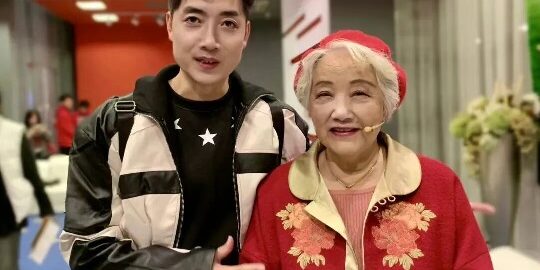
纽约综合新闻消息 上海戏剧学院80周年校庆的贵宾室里,祝希娟老师早早落座于最里面的沙发上。当王国权陪同他的老师、新晋中国文联终身成就奖得主配音大师乔榛稍晚抵达时,满室星光让他并未立刻注意到这位87岁的老艺术家。直到起身致意的瞬间,王国权才瞥见那双熟悉的”火辣辣的大眼睛”。
四目相对的一刻,祝希娟竟主动快步迎上前来,声音清朗地唤出他的名字,更提起两人四年前因一场国际文化活动相识,随后共同担任全国青少年才艺大赛形象大使的往事。这份跨越岁月的记挂,让王国权深受震撼。
作为联合国妇女地位委员会第69届世界妇女大会多个官方论坛主持人,王国权在整个美国妇女月持续于纽约公益主持及演唱,支持各类国际妇女活动,被国际媒体誉为”国际妇女之友”。他的专访名录exclusively覆盖全球杰出女性——从女外交官、女艺术家、女慈善家,到千万网红、女企业家、女大律师、女科学家等各领域翘楚。身为歌手与主持人,本无任何写作义务的王国权,纯粹为公益宣传女性力量,才投入大量时间进行这些专访。而此刻,面对这位新中国第一位百花影后,王国权怀着对祝老师深深的敬佩与感动,当即决定:待她忙完校庆演出回家好好休息后,必须为她做一次连线专访。

王国权和祝希娟在上戏实验剧场贵宾室重逢
一、缘起:国际舞台上的艺术共鸣
四年前的那场国际文化活动,是这段忘年交的起点。随后共同担任全国青少年才艺大赛形象大使的经历,让两人虽年龄悬殊,却因对艺术教育的热忱结为莫逆之交。王国权表示:”祝老师是中国银幕第一位真正独立女性的塑造者,她的艺术生命力和人生选择,正是当代女性精神的最佳注脚。能为她做一次专访,是我的荣幸。”

2021年12月祝希娟和王国权被聘为全国少儿才艺大赛形象大使
二、上戏情缘:从这里走向”红色娘子军”
“我1957年考入上戏表演系,1960年毕业,至今已经65年了。”祝希娟轻抚着校庆纪念册,目光悠远。她回忆起那段改变她人生的经历:”1960年,我还在上戏读大三,谢晋导演专程到学校来选演员。那天下午,他正在看我们班实习演出的话剧《在和平的日子里》,我和几个男同学为了一个角色争论不休。谢导后来告诉我,就是看到我那种不服输、不退让的劲儿,当场就认定——这就是他要找的吴琼花。”

王国权问及拍摄《红色娘子军》的幕后,祝希娟说:”为了演好琼花,我们全体演员去了海南岛娘子军原址体验生活。每天清晨六点起床,参加军训、打靶、急行军、露营,直到太阳落山。那种从骨子里长出来的倔强和泼辣,不是靠演技演出来的,是生活给的。”
三、百花影后:24岁登顶,却选择回归平淡
1962年,24岁的祝希娟凭借吴琼花一角,以11万余张观众选票荣获首届大众电影百花奖最佳女演员奖,成为新中国第一位”影后”。时任中国文联主席郭沫若亲自为她题诗:”出生入死破旧笼,海南岛上皆东风。浇来都是英雄血,一朵琼花分外红。”

郭沫若为祝希娟颁奖
“获奖时正值三年困难时期,颁奖大会没有隆重典礼,没有华丽舞台,连奖杯都没有。”祝希娟对王国权说,”但我们得到了观众最真挚的喜爱。那种鼓励,比任何奖杯都珍贵。”
令人意外的是,成名后的祝希娟并未趁热打铁追逐名利,反而转身回到话剧舞台潜心打磨演技。”演员只是一份职业,能演就好好演,不能演,就好好活。”她说。

年轻时的祝希娟
祝希娟近影
四、人生转折:从深圳到洛杉矶,再回故土
1983年,已是知名演员的她做出惊人决定——放弃北京舒适圈,南下深圳参与创办深圳电视台,并担任副台长兼电视艺术中心主任,成为该台第一位节目主持人。

祝希娟接受媒体采访
“人到中年闯深圳,很多人说我冒险。但’永远向前进’不仅是《红色娘子军》的主题曲,更是我的座右铭。”祝希娟说。
截图

初到深圳时的祝希娟
1998年退休后,她赴洛杉矶居住十余年陪伴子女。2018年,80岁的祝希娟与丈夫侯烽民选择回国,在深圳一家养老机构安度晚年。这一决定曾引发争议,但她坦然回应:”我有儿有女,但不想麻烦他们。住进养老院,是我和老伴共同的选择,这里有专业的照顾,也有同龄的伙伴。”
祝希娟在美国洛杉矶
五、87岁:艺术常青的秘诀
令王国权惊叹的是,祝希娟至今从未停止表演。2017年,79岁的她参演《大雪冬至》,饰演独居老人魏大雪,次年即获金鸡百花终身成就奖。2019年81岁时,她凭《空巢》获金鸡奖最佳女主角提名,与任素汐、周冬雨等青年演员同台竞争。
祝希娟《大雪冬至》剧照
“我深信只要倾注心血,就能获得认可,这与年龄无关。”祝希娟说,”现在的电影类型丰富,有才华的电影人很多,我真心为同行高兴。”
谈及养生哲学,她笑道:”养生不如养心态。我每天坚持读书看报,关心时事,保持好奇心。艺术生命要常青,首先心态要年轻。”
祝希娟主演的部分电影剧照
六、对话传承:女性力量的代际共鸣
作为联合国妇女大会官方论坛主持人,王国权特别问及:”您塑造的吴琼花,是中国银幕最早的独立女性形象之一。您觉得当代女性最需要坚守的品质是什么?”
祝希娟沉吟片刻:”独立人格。吴琼花追求的是’自己的事自己做主’,这个内核永不过时。就像王老师您在国际舞台上为女性发声,我们都在各自的时代里,做着力所能及的推进。”

她特别提到上戏校训”至善至美”,”表演不仅是技巧,更是做人。真诚、朴素、执着,这些品质永远不会过时。”
专访结束时,王国权特意用手机播放了《红色娘子军》的主题曲。祝希娟轻声哼唱:”向前进,向前进……”87年的岁月,未曾改变她眼中的光。王国权动容地说:”祝老师,下次联合国国际妇女节系列活动,我一定把您的故事唱进歌里。”
【新闻延伸】就在本次专访成稿之际(12月7日),王国权又收到了由联合国MICF提名,联合国妇女署审核批准发来的第70届联合国妇女地位委员会世界妇女大会(CSW70)的官方正式邀请函,这位”国际妇女之友”将于明年三月再次启程前往联合国总部,作为全球华人屈指可数的男性官方代表,继续为全球女性权利发声。

结语
从上海戏剧学院的学生宿舍,到海南岛的红色根据地;从百花奖的领奖台,到深圳电视台的初创岁月;从洛杉矶的海外生活,再回到故土的养老院——祝希娟用近七十年的艺术生涯,诠释了何谓”人民艺术家”。
这场对话,不仅是”国际妇女之友”与”中国银幕第一女性英雄”的惺惺相惜,更是两代艺术工作者对”至善至美”校训的隔空呼应。正如她所说:”人生不是按标准剧本演出的,但每一幕都要活得清醒、洒脱。”

compactnews USA
When the “Prince of Love Songs” Meets “Qionghua”—Wang GuoQuan-Prince John in Conversation with Zhu Xijuan
(Special Report for the 80th Anniversary of Shanghai Theatre Academy)
In the VIP lounge of Shanghai Theatre Academy’s 80th anniversary celebration, veteran actress Zhu Xijuan was already seated on a sofa at the far end. When Wang GuoQuan-Prince John arrived later, accompanying his mentor—newly minted lifetime achievement award winner of the China Federation of Literary and Art Circles, dubbing master Qiao Zhen—the room was so filled with stars that the 87-year-old artist initially escaped his notice. It was only when rising to greet others that Wang GuoQuan-Prince John caught sight of those familiar “fiery, passionate eyes.”
In that moment of mutual recognition, Zhu Xijuan strode forward with surprising vigor, calling out his name in a clear voice. What moved Wang GuoQuan-Prince John even more deeply was that she recalled in detail how they had met four years earlier at an international cultural event, and subsequently served together as ambassadors for a national youth talent competition. This genuine warmth and remarkable memory across the years touched him profoundly.
As host of multiple official forums at the 69th UN Commission on the Status of Women, Wang GuoQuan-Prince John has spent entire Women’s History Months in the U.S. performing and hosting pro bono for international women’s causes, earning him the title “Friend of International Women” from global media. His exclusive interview roster spans outstanding women worldwide—female diplomats, artists, philanthropists, influencer entrepreneurs, senior counsels, and scientists across industries. A singer and host with no professional obligation to write, Wang GuoQuan-Prince John dedicates countless hours to these profiles purely to champion women’s voices. Now, facing China’s first Hundred Flowers Award Best Actress, filled with deep respect and admiration for Teacher Zhu, he resolved on the spot: after she completed her anniversary performances and returned home to rest, he would conduct a special interview with her.
I. Origins: Artistic Resonance on the International Stage

The encounter four years ago at an international cultural exchange marked the beginning of this intergenerational friendship. Their subsequent role as co-ambassadors for a national youth talent competition forged a bond despite their age gap, united by passion for arts education. Wang GuoQuan-Prince John reflects: “Teacher Zhu is the most senior artist I’ve interviewed, yet her progressive mindset puts younger creatives to shame. Her choice to live in a retirement home embodies the highest form of contemporary female independence. This interview is an honor.”

II. STA Bond: The Path to “The Red Detachment of Women”
“I entered the Shanghai Theatre Academy’s acting department in 1957, graduated in 1960—65 years ago,” Zhu says, her fingers tracing the anniversary album. She recalls the life-altering moment: “In 1960, as a junior at STA, director Xie Jin came to cast actors. During our class performance of “In Days of Peace,” I argued with male classmates over a role. Xie later told me it was that unyielding spirit that made him decide on the spot—I was his Qionghua.”
When Wang GuoQuan-Prince John asks about filming “The Red Detachment of Women,” Zhu explains: “To become Qionghua, our entire cast lived where the real detachment had been. Up at 6 AM daily for military training, target practice, forced marches, camping—until sunset. That grit came from lived experience, not acting technique.”
III. Hundred Flowers Queen: Peaking at 24, Then Choosing Simplicity
In 1962, at 24, Zhu won the inaugural Hundred Flowers Award for Best Actress with 110,000+ votes, becoming New China’s first “film queen.” Guo Moruo, then Chairman of the China Federation of Literary and Art Circles, wrote her a poem: “Breaking free from life-and-death struggles, Hainan Island sings of east wind. Watered by hero’s blood, one Qionghua flower blooms uniquely red.”
“The award came during the three hard years—no grand ceremony, no lavish stage, not even a trophy,” Zhu tells Wang GuoQuan-Prince John. “But we received audiences’ most sincere love. That encouragement outweighed any trophy.”
Surprisingly, post-fame Zhu didn’t chase the spotlight but returned to theater to hone her craft. “Acting is just a profession—do it well while you can; if not, live well.”
IV. Life Transitions: Beijing to Shenzhen, Los Angeles, and Home Again
In 1983, the established actress made a bold move—leaving Beijing’s comfort to co-found Shenzhen Television Station as deputy director and chief of arts, becoming its first host.
“Starting over in Shenzhen at midlife seemed risky, but ‘Always March Forward’—the film’s theme song—has become my motto,” Zhu says.
After retiring in 1998, she spent over a decade in Los Angeles with her children. In 2018, at 80, she and husband Hou Fengmin chose to return to China, settling in a Shenzhen retirement home. The decision sparked debate, but Zhu remains unperturbed: “I have children but don’t wish to burden them. This was our mutual choice—professional care and peer companionship.”
V. Age 87: The Secret to Evergreen Artistry
What astonishes Wang GuoQuan-Prince John is Zhu’s unceasing artistic drive. At 79 in 2017, she starred in “Heavy Snow Winter Solstice” as a solitary elderly woman, winning a lifetime achievement award the next year. At 81 in 2019, her role in “Empty Nest” earned her a Golden Rooster Best Actress nomination alongside young stars like Ren Suxi and Zhou Dongyu.
“I believe wholehearted dedication brings recognition, regardless of age,” Zhu says. “Today’s cinema is diverse with talented people—I genuinely rejoice for my colleagues.”
On her wellness philosophy: “Better to nourish the mind than the body. I read daily, stay informed, remain curious. For artistic longevity, first keep a youthful mindset.”
VI. Dialogues on Legacy: Intergenerational Female Power
As a UN women’s forum host, Wang GuoQuan-Prince John asks: “Qionghua you created was among China’s earliest independent female screen images. What quality should contemporary women hold onto most?”
Zhu pauses: “Independent identity. Qionghua pursued ‘making her own decisions’—that core never ages. Like you advocating for women internationally, we each do what we can in our era.”
She cites STA’s motto “Utmost Goodness and Beauty”: “Acting is technique, but also character. Sincerity, simplicity, perseverance—these never go out of style.”
As the interview concludes, the campus echoes with “The Red Detachment of Women’s” theme song. Zhu hums softly: “March forward, march forward…” At 87, the light in her eyes remains undimmed. Wang GuoQuan-Prince John says with emotion: “Teacher Zhu, at next year’s Women’s History Month, I will sing your story.”
【News Update】 As this interview was being finalized (December 4), Wang GuoQuan-Prince John received another formal invitation to the 70th UN Commission on the Status of Women (CS W70). The “Friend of International Women” will once again travel to UN Headquarters next March to continue advocating for women’s rights worldwide.
Epilogue
From STA’s student dorms to Hainan’s revolutionary base; from the Hundred Flowers podium to Shenzhen TV’s founding days; from Los Angeles to a Chinese retirement home—Zhu Xijuan’s seven-decade career defines what it means to be an artist of the people.
This dialogue is more than a meeting between the “Friend of International Women” and China’s first screen heroine—it’s an intergenerational echo of STA’s “Utmost Goodness and Beauty.” As she says: “Life doesn’t follow a standard script, but every scene must be lived with clarity and grace.”


